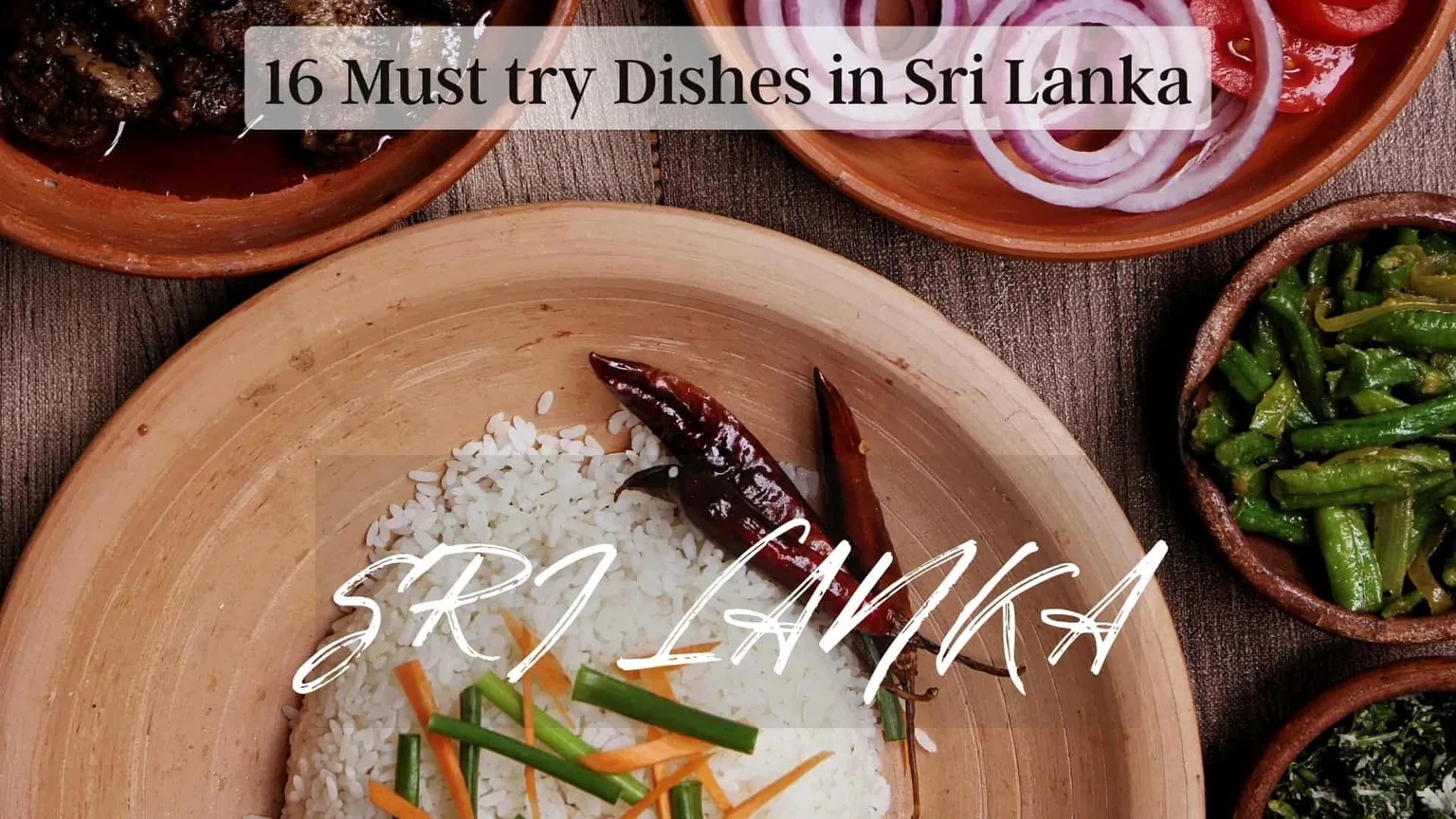
Sri Lanka — the teardrop-shaped island in the Indian Ocean — is one of Asia’s most underrated food destinations. Built on centuries of spice trade, colonial influence, and vibrant regional traditions, Sri Lankan cuisine is a feast of bold flavours, aromatic spices, and coconut-rich dishes that will leave you craving more long after you leave.
Whether you’re wandering the streets of Colombo, exploring the misty hills of Ella, or relaxing on the beaches of the south coast, here are the must-try food in Sri Lanka you absolutely cannot miss.
Anatomy of the Plate: Sensory Deep Dives into Signature Dishes
The “best restaurants to try in Sri Lanka” are defined by dishes that are sensory masterpieces, combining centuries of cultural fusion into a single bite.
1. Lamprais: The Burgher Legend
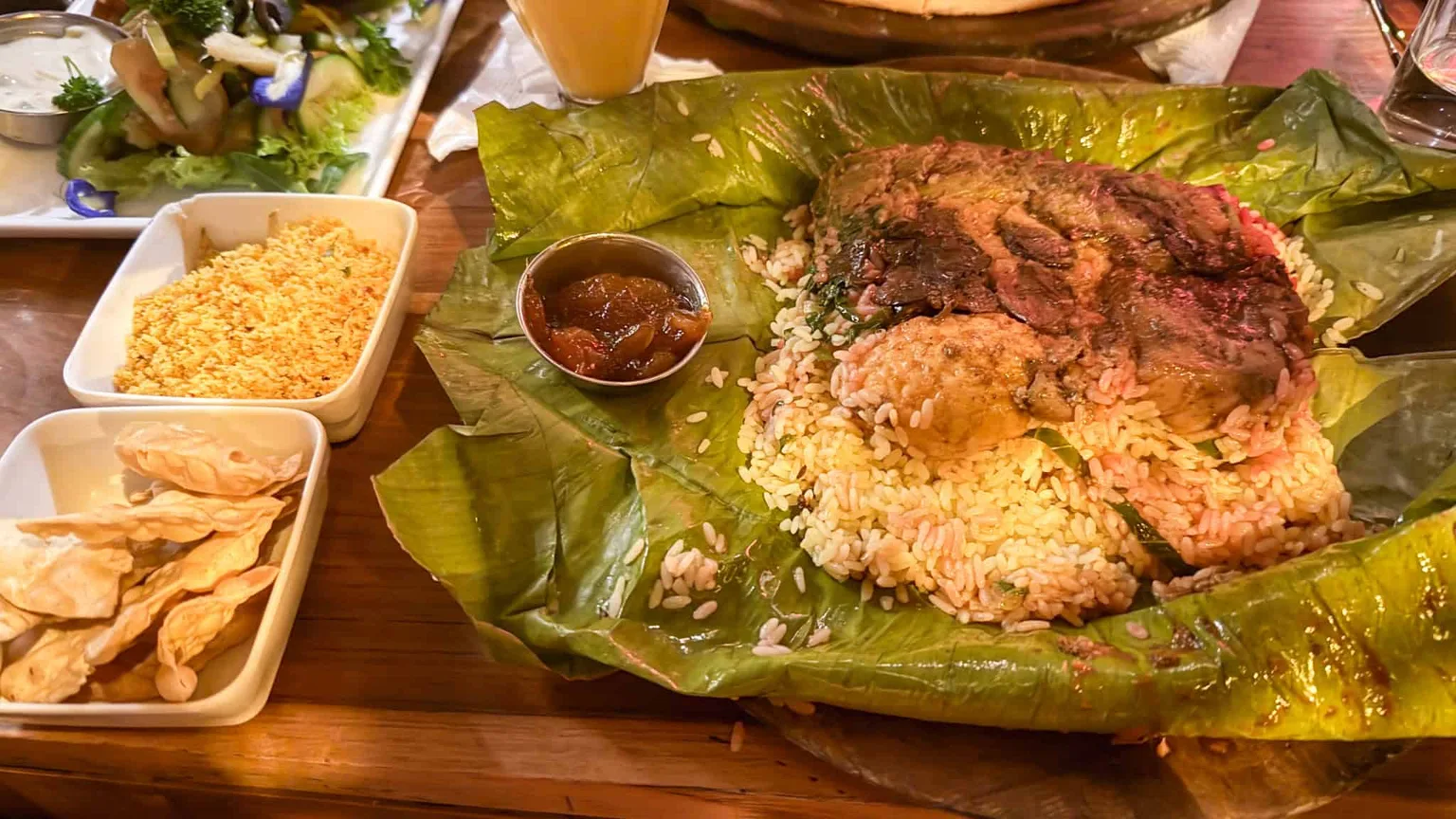
Lamprais (from the Dutch lomprijst, meaning “a packet of food”) is a rich, aromatic parcel of spiced rice, mixed meat curry, Dutch-style meatballs (frikkadels), brinjal moju (pickled eggplant), and sambol — all wrapped in a banana leaf and baked.
Lamprais is a dish that demands total sensory attention. It is a combination of rice, meat, and condiments wrapped in a banana leaf and steamed. The aroma of the banana leaf, mingling with the spicy scents of cardamom, clove, and cinnamon, wafts up as the parcel is opened. Inside, short-grained rice cooked in meat stock is accompanied by:
- Frikkadels: Dutch-style crisp-fried meatballs.
- Vambatu Moju: A sweet-and-sour pickled aubergine dish.
- Seeni Sambol: Caramelised onions with bonito flakes.
- Blachan: A dried prawn relish that packs a mighty “umami punch”.
The best way to savour lamprais is with the fingers, allowing the textures and the “peppery heat” of the curry to be undercut by the sweet moju and savoury blachan.
2. Polos Curry: The Vegan Powerhouse
Polos, or young green jackfruit curry, is a quintessential Sri Lankan vegan dish that has gained global acclaim for its meat-like texture. When young, the fruit is hard and green, but when slow-cooked with roasted spices and creamy coconut milk, it becomes tender and savoury.
The traditional preparation involves roasting spices such as coriander, cumin, and fennel seeds until fragrant, then grinding them with coconut oil. The jackfruit is then simmered in an earthen pot over a low flame, often for one to two hours, until the flavours are deeply absorbed. The result is a “pungent, creamy” sauce that is a staple of any traditional rice and curry spread.
3. Ambul Thiyal: The Southern Sour Fish Curry
Ambul Thiyal is one of the oldest preservation-style dishes in Sri Lanka, originating in the south. It is a sour, dry-style curry made primarily with tuna or skipjack. The key ingredient is goraka (Garcinia\ cambogia), a tangy fruit that preserves the fish and gives the dish its characteristic dark colour and sharp tang. Slow-cooked in a clay pot, the moisture is completely absorbed, leaving the fish coated in a thick, spicy, and peppery crust that is “addictive” when paired with soft white rice.
This unique sour fish curry is a dish you won’t find anywhere else in the world. Originating from Sri Lanka’s southern coast, ambul thiyal is made with tuna, black pepper, and goraka (a natural sour fruit), resulting in a dry, intensely flavoured, blackened curry.
It was traditionally used as a preservation method and is now one of the most celebrated dishes in the country.
Where to try it: Any local restaurant in Galle, Matara, or along the south coast.
4. Rice and Curry — The National Dish
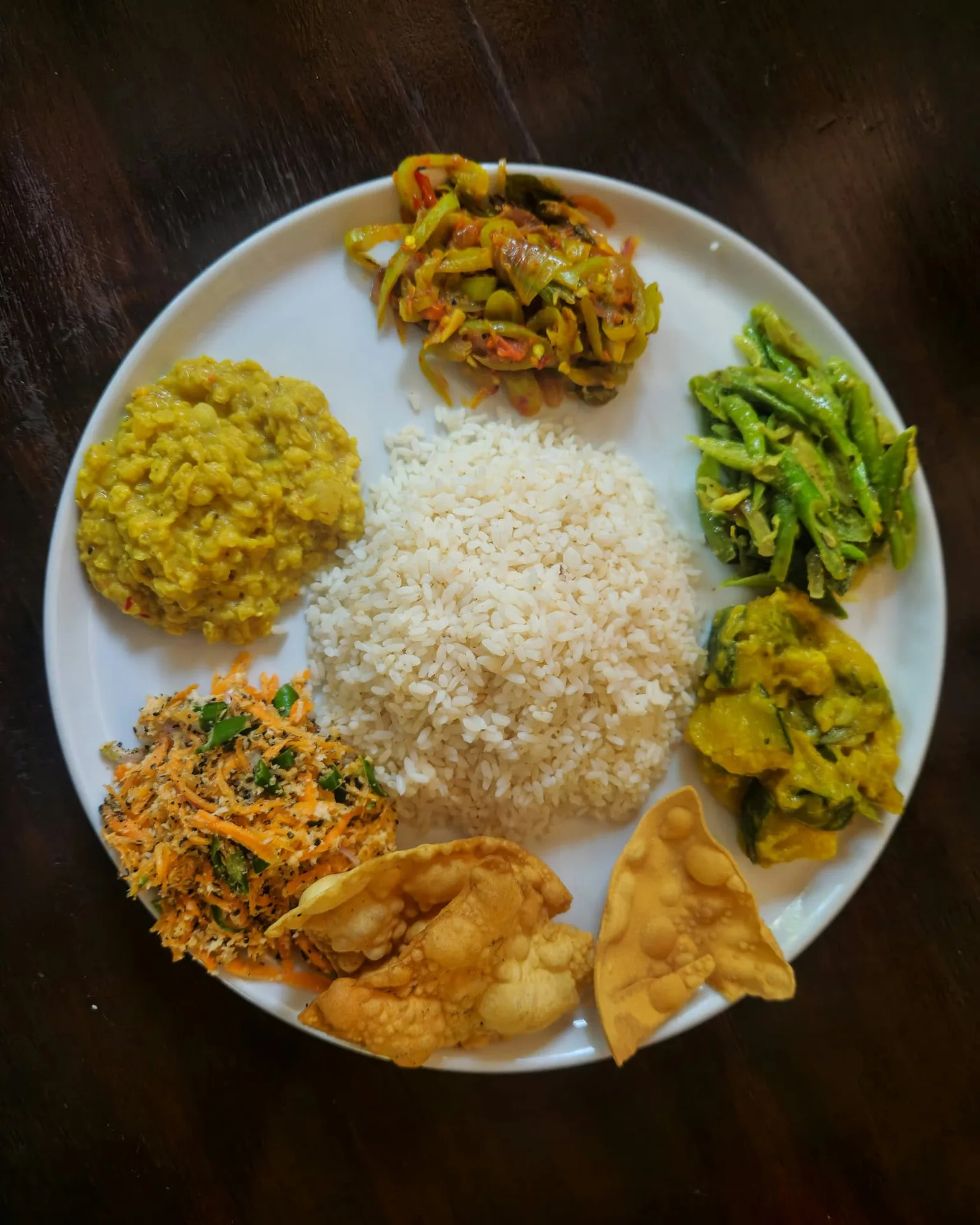
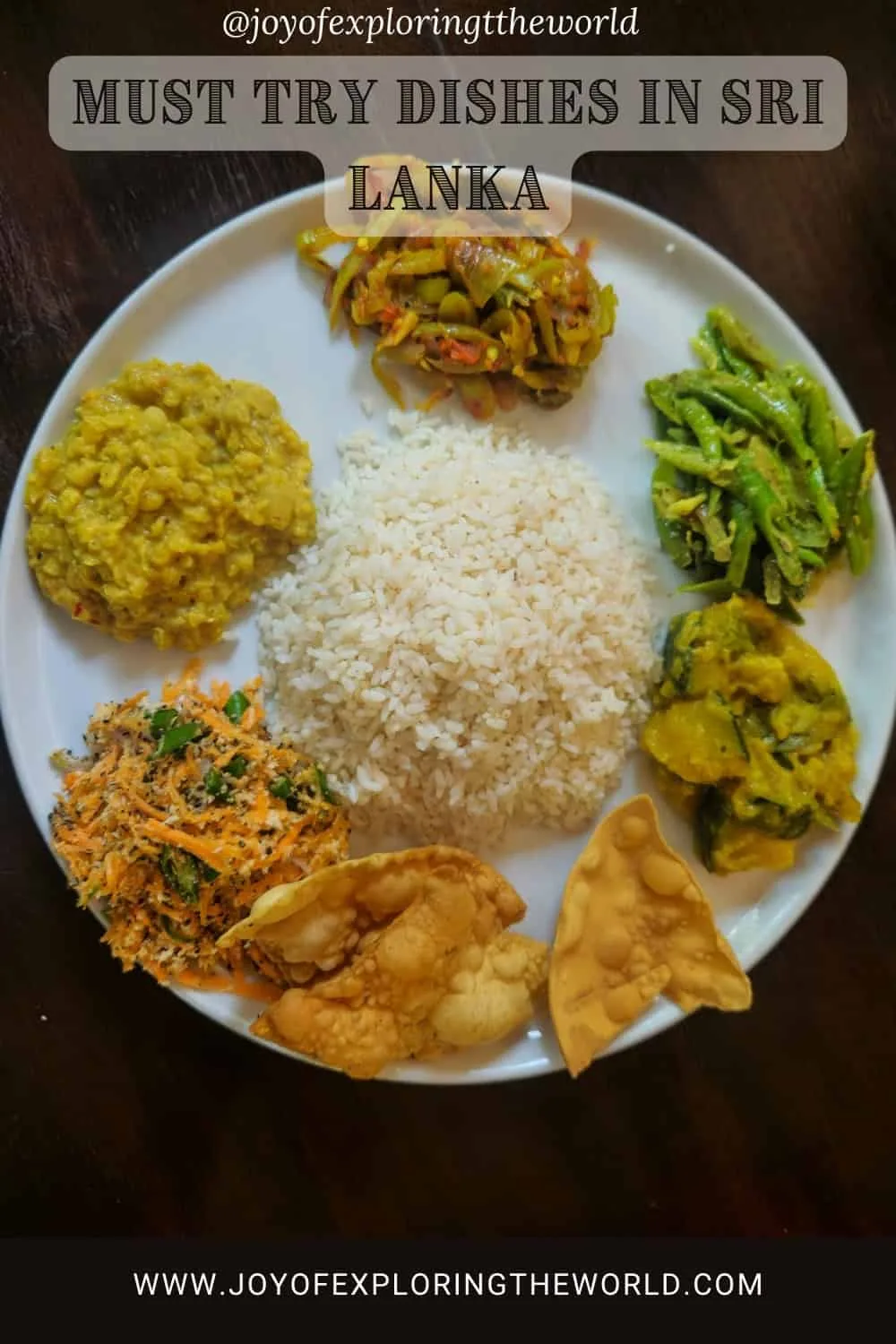
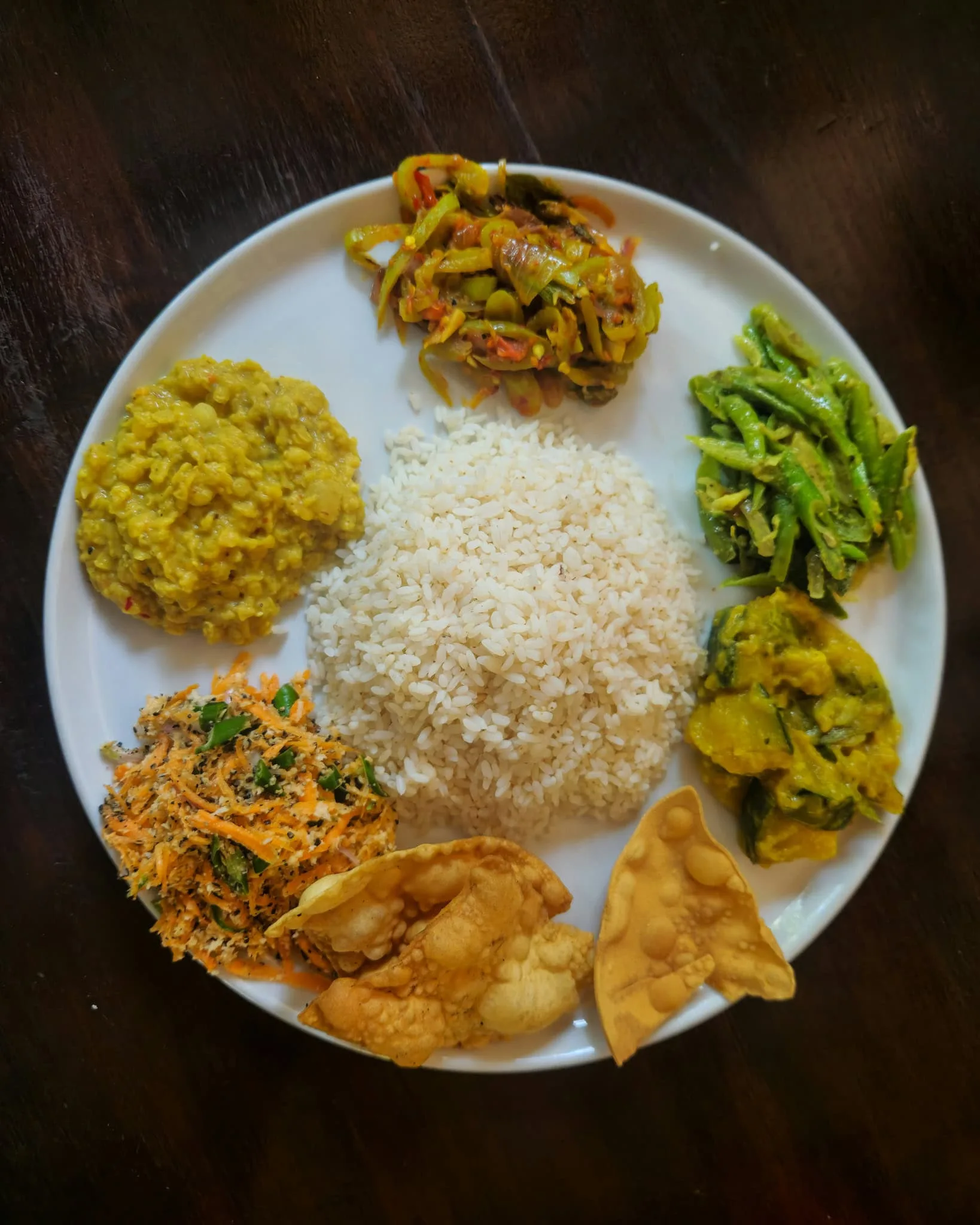
No trip to Sri Lanka is complete without eating rice and curry, the foundation of every Sri Lankan meal. But don’t let the simple name fool you — this is not one dish. It’s an entire spread.
A typical plate features steamed rice surrounded by multiple small curries and accompaniments:
- Dhal curry (creamy red lentils in coconut milk)
- Chicken, fish, or mutton curry
- Pumpkin curry
- Jackfruit curry
- Pol sambol (spicy coconut relish)
- Papadam and pickles
Every household, every region, and every restaurant makes it differently — meaning no two rice and curry meals ever taste the same.
Where to try it: Local eateries (known as “hotels” in Sri Lanka) offer the most authentic versions. In Colombo, try Upali’s or the Barefoot Café.
5. Kottu Roti — Sri Lanka’s Iconic Street Food
Kottu roti is the undisputed king of Sri Lankan street food. Made by chopping flatbread (godamba roti) on a searing hot griddle with vegetables, eggs, spices, and your choice of meat, kottu is as much an auditory experience as a culinary one — the rhythmic clanging of the metal blades is an unmistakable sound on any Sri Lankan street.
Popular variations include:
- Chicken kottu
- Cheese kottu
- Seafood kottu
- Vegetable kottu
Pro tip: Kottu is a dinner-time dish — you’ll typically find it after 5 pm. In Colombo, Pilawoos is the legendary spot to try it.
6. Hoppers (Appa) — The Sri Lankan Pancake
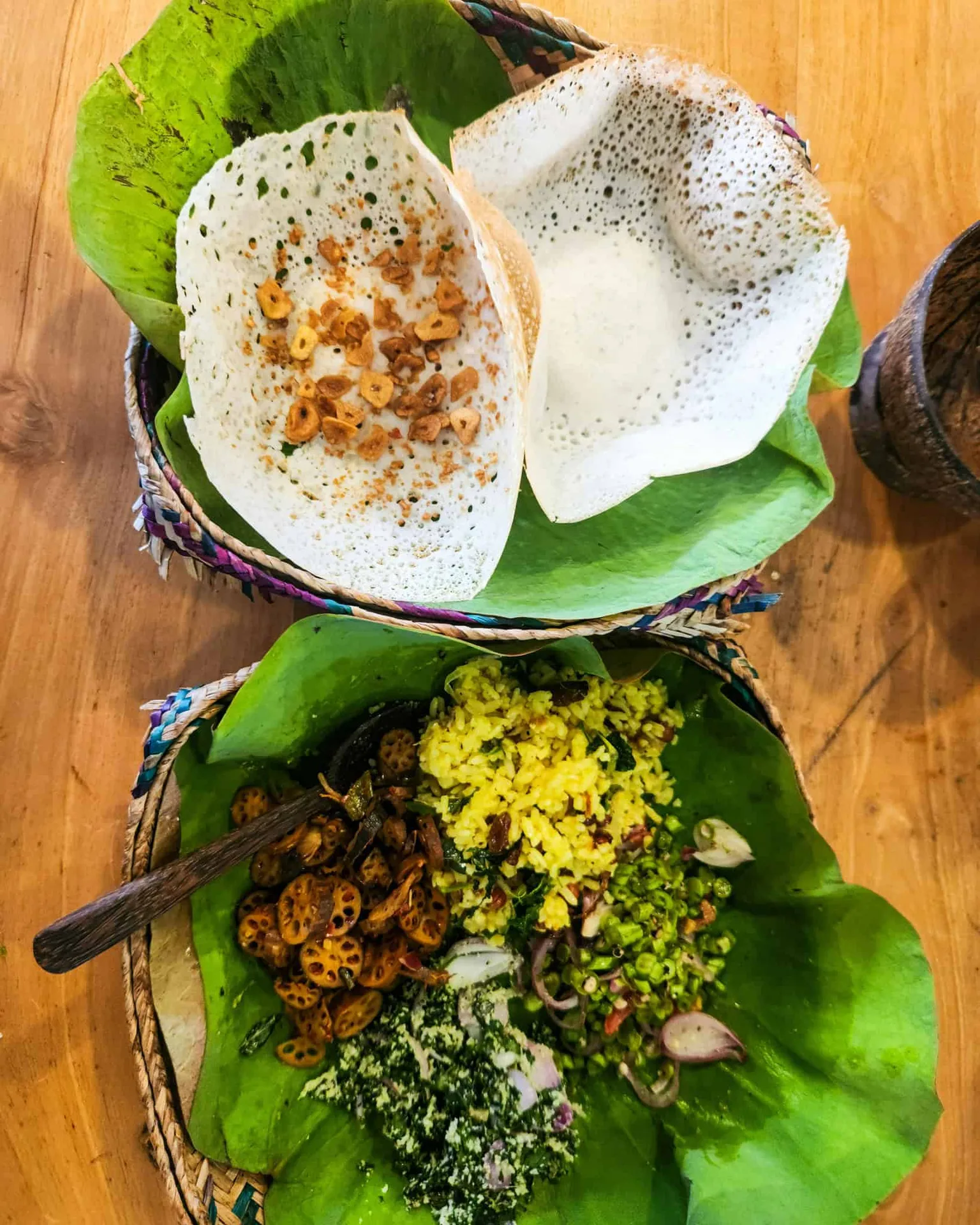
Hoppers are delicate, bowl-shaped pancakes made from fermented rice flour and coconut milk. Cooked in a small wok-like pan, they come out crispy on the edges and soft and spongy in the centre. Variations include:
- Plain hoppers — eaten with sambol and curry
- Egg hoppers — with a fried egg cracked into the centre
- Sweet hoppers — made with coconut milk and sugar
They’re a breakfast and dinner staple and an absolute must-try for first-time visitors.
7. String Hoppers (Idiyappam)
String hoppers are steamed rice noodle nests, light and delicate, typically served with dhal curry and coconut sambol. They’re one of the most popular breakfast items in Sri Lanka and a favourite among vegetarians and vegans alike.
Pair them with a fiery pol sambol for the full experience.
8. Pol Sambol — The Heart of Every Meal
No Sri Lankan meal is complete without pol sambol, a fiery coconut relish made with freshly grated coconut, red chilli, lime juice, onion, and Maldive fish flakes. It’s simple, it’s bold, and it’s addictive.
Serve it alongside rice and curry, hoppers, string hoppers, or roti — pol sambol elevates everything it touches.
9. Sri Lankan Crab Curry
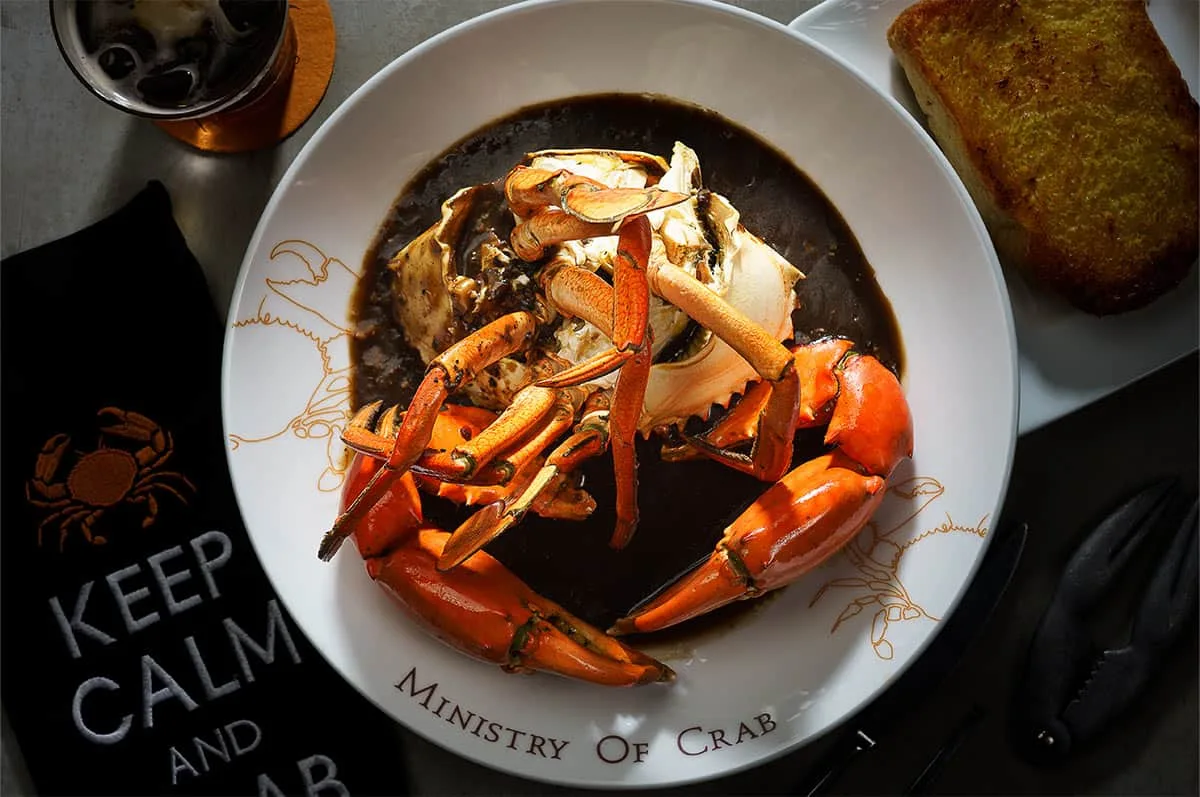
Sri Lanka’s mud crab curry is internationally renowned, and for good reason. Cooked in a rich coconut milk and spice gravy, this luxurious, messy, and deeply flavourful dish is a must for seafood lovers.
The best crab curry is found in coastal areas and Jaffna, where the fiery Jaffna crab curry is the crown jewel of Tamil cuisine.
Where to try it: Ministry of Crab in Colombo for a fine dining experience, or local restaurants in Jaffna for the authentic version.
10. Devilled Dishes — For Spice Lovers
Anything labelled “devilled” in Sri Lanka means you’re in for a fiery ride. Devilled dishes are stir-fried with chillies, onions, peppers, and a tangy tomato-based sauce, creating bold, spicy flavours.
Popular devilled dishes include:
- Devilled prawns
- Devilled chicken
- Devilled potatoes
These pair perfectly with plain rice or a cold beer.
11. Pittu — The Rice and Coconut Cylinder
Pittu is a steamed mixture of rice flour and grated coconut, shaped inside a cylindrical bamboo mould. It has a crumbly, satisfying texture and is usually served with curry and coconut milk.
It’s a popular breakfast dish, especially in the northern and eastern parts of the island.
12. Watalappam — Sri Lanka’s Signature Dessert
This rich, creamy coconut custard is flavoured with jaggery (palm sugar), cardamom, nutmeg, cloves, and cashew nuts. Introduced by Malay immigrants, watalappam is a beloved dessert served at festivals, weddings, and celebrations.
It tastes like a spiced crème caramel and is the perfect sweet ending to a spicy meal.
13. Curd and Treacle (Kiri Pani)
One of the simplest yet most memorable desserts in Sri Lanka, buffalo curd is a thick, tangy yoghurt served with a generous drizzle of kithul treacle (palm honey). The combination of sour curd and sweet golden treacle is pure perfection.
Pro tip: Look for fresh curd sold in clay pots at roadside stalls, especially in the southern regions.
14. Short Eats — Sri Lanka’s Favourite Snacks
“Short eats” is the uniquely Sri Lankan term for a variety of savoury pastries and snacks found in bakeries and street stalls everywhere. Must-tries include:
- Fish buns (maalu paan) — yeasted bread stuffed with spiced fish
- Vegetable rolls — crispy deep-fried rolls with curry filling
- Isso Wade — prawn fritters made with spiced lentil batter
- Patties — crescent-shaped pastries with savoury fillings
- Samosas
They’re affordable, portable, and utterly addictive.
15. Isso Wade — Prawn Fritters
These golden, crispy prawn fritters deserve a special mention. Made from a spiced lentil batter topped with whole prawns and deep-fried to perfection, isso wade is a beloved snack found at beachside stalls, markets, and the famous Galle Face Green in Colombo.
16. Wambatu Moju — Sweet and Sour Eggplant
This underrated side dish of pickled eggplant fried with vinegar, sugar, onions, and spices is a hidden gem of Sri Lankan cuisine. It balances rich curries beautifully and is often the dish that surprises visitors the most.
Drinks You Must Try
- Ceylon tea — Visit a tea estate in Ella or Nuwara Eliya and taste the world’s finest
- King coconut (thambili) — A bright orange coconut, sweeter and more refreshing than regular coconut water
- Wood apple juice — Tangy, sweet, and unlike anything you’ve tasted before
- Kola kenda — A nutritious herbal green porridge, popular for breakfast
- Arrack – Sri Lankan Arrack is a traditional, 40% ABV spirit distilled from the fermented sap of coconut flower stems (toddy).
Tips for Eating in Sri Lanka
* Spice warning: Sri Lankan food is among the spiciest in the world. Don’t hesitate to ask for “less spicy” (miris adu-wata).
* Eat where the locals eat: Busy stalls and small “hotels” offer the freshest, most authentic food at the best prices.
* Use your right hand: Many Sri Lankans eat with their hands — try it for the full experience.
* Take a cooking class: Cities like Colombo, Galle, and Ella offer cooking experiences where you can learn to make traditional dishes yourself.
* Go regional: The north (Jaffna) offers fiery Tamil-influenced cuisine, the south specialises in seafood, and the hill country is known for hearty vegetable curries. Each region tells a different culinary story.
Practical Travel Tips: Timing and Logistics
To maximise the culinary experience in Sri Lanka, travellers must navigate the local calendar and dining logistics with precision.
The Importance of Reservations and Poya Days
High-demand venues like Ministry of Crab or Amangalla are frequently fully booked. Reservations should ideally be made two to three days in advance for weekdays and even earlier for weekends. It is critical to understand that the restaurant scene is impacted by Poya Days (full moon holidays), during which many establishments may close, and the sale of alcohol is strictly prohibited across the island.
| Seating Detail | Ministry of Crab | General Trend |
| Seating Duration | Strictly 2 Hours | Standard in busy hubs |
| Dress Code | Casual / Smart Casual | Relaxed in 2025 |
| Payment | Visa, Amex, Apple Pay | Card-friendly in cities |
| Arrival Tip | 15 min hold limit | Be punctual for slots |
Seasonality and Seafood
For seafood enthusiasts, the best time to visit the western and southern coasts (including Colombo, Galle, and Mirissa) is from December to April, when the seas are calm, and fishing conditions are optimal. Conversely, the east coast (Trincomalee and Jaffna) is best explored from May to September. This ensures access to the “catch of the day” that defines the coastal dining experience.
Where to Stay in Sri Lanka
- Here are some of my favourite places where I stayed
Colombo
Sigiriya
Ella
Kandy
Nuvara Eliya
Galle
- For stays on every budget in Colombo, you can look at the links below:
- Or use this map for Sri Lanka:
- You can also read:
- My guide on the Sri Lankan itinerary here,
- Or download an in-depth itinerary here,
- Or you can also contact me to get a fully booked holiday.
Final Thoughts
Sri Lankan cuisine is one of the most flavourful and diverse in all of Asia. From the comforting simplicity of rice and curry to the theatrical spectacle of kottu roti, every meal tells a story of history, culture, and community.
If you truly want to understand Sri Lanka, start with its food. It’s not just something you eat during your trip — it becomes something you miss long after you leave. Hope you enjoy and try all the ‘Must try Dishes in Sri Lanka’ on your trip.
Contact me if you want a tailored custom itinerary or a fully booked holiday. You can also download my PDF version itinerary for Sri Lanka.
Pin Me
Further read on Sri Lanka





Leave a Reply