

Bournemouth beaches isn’t really one beach. It’s seven miles of sand split into a string of named stretches — chines, they’re called locally, after the wooded ravines that cut down through the cliffs to reach the shore — and each one has a slightly different personality. Some are packed with deckchairs and ice cream queues by 11am in August. Others, a fifteen-minute walk further along, are half-empty even in July.
So “which Bournemouth beaches is best” depends entirely on what you’re after. This guide ranks them properly, with the practical stuff — parking, dog rules, whether there’s actually a Blue Flag — sorted out so you’re not guessing when you get there.
Looking for best beach holiday in UK? My guide ranking all the best Beaches in UK and what they are best known for, best mode of travel from London and approx. time to travel will be give you all the assistance you need.
The short version: if you want the classic postcard Bournemouth experience, head for the central beach around the Pier. If you want the same soft sand with a fraction of the crowd, Alum Chine or Durley Chine will do it. If you’ve got a dog in tow between May and September, skip the middle of the beach entirely and go to Southbourne or Fisherman’s Walk instead.
I have also created a guide for dinning in Bournemouth which answers everything you need to know. Best restaurants to go in Bournemouth for the most mouth watering sea food, spectacular views, international cuisine and budget hidden gems that you should not miss.
Quick answer: which Bournemouth beach should you pick?
If you’re short on time, here’s the cheat sheet.
| Beach | Best for | Blue Flag 2026? | Dogs (May–Sept) | Beach Huts | Crowds |
|---|---|---|---|---|---|
| Bournemouth Beach (central) | First-time visitors, families, the classic view | Seaside Award | No (promenade only, on lead) | Yes | Busiest |
| Alum Chine | Quieter families, a proper “chine” walk down | No | No | Yes | Moderate |
| Durley Chine | Water quality, a calmer version of the main beach | Yes | No | Yes | Moderate |
| Boscombe Beach | Surfing, watersports, a younger crowd | No | No | Yes | Moderate |
| Southbourne Beach | Locals’ favourite, beach huts, relaxed pace | No | Yes (year-round zone) | Yes | Low-Moderate |
| Fisherman’s Walk | Dog walkers, quieter promenade | Yes | Yes (year-round zone) | Yes | Low |
| Sandbanks | A splurge day, watching the chain ferry, Poole Harbour views | Yes | Partial (western end) | Yes (Famously Pricey) | Moderate (by Ferry) |
| Hengistbury Head | Nature, views, a proper walk rather than a lie-down | No | Yes (year-round) | No | Low |
And if you’re willing to travel a bit further afield:
| Beach | Distance from Bournemouth | Best for | Getting there |
|---|---|---|---|
| Durdle Door | ~24 miles / 45 min drive | That famous rock arch photo | Car (pre-book parking) or coach tour |
| Lulworth Cove | ~25 miles / 45 min drive | Calm swimming, rock pools, fossils | Car, or a 30-min coastal walk from Durdle Door |
| Studland Bay | ~10 miles / Sandbanks ferry + short drive | Wild, dune-backed sand, walking, dogs | Sandbanks chain ferry or bus 50 |
Now the detail.
1. Bournemouth Beach (Central) — the one everyone pictures
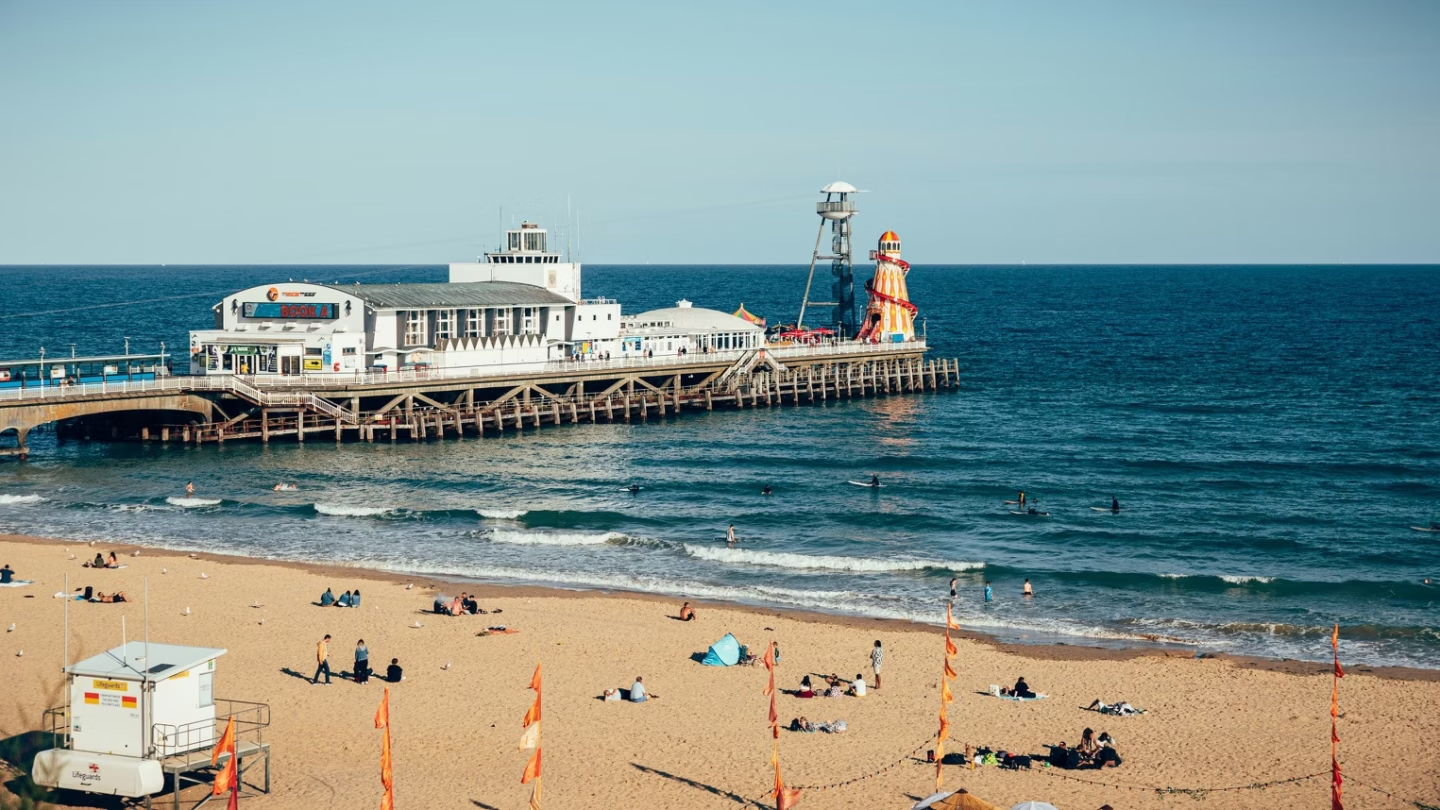
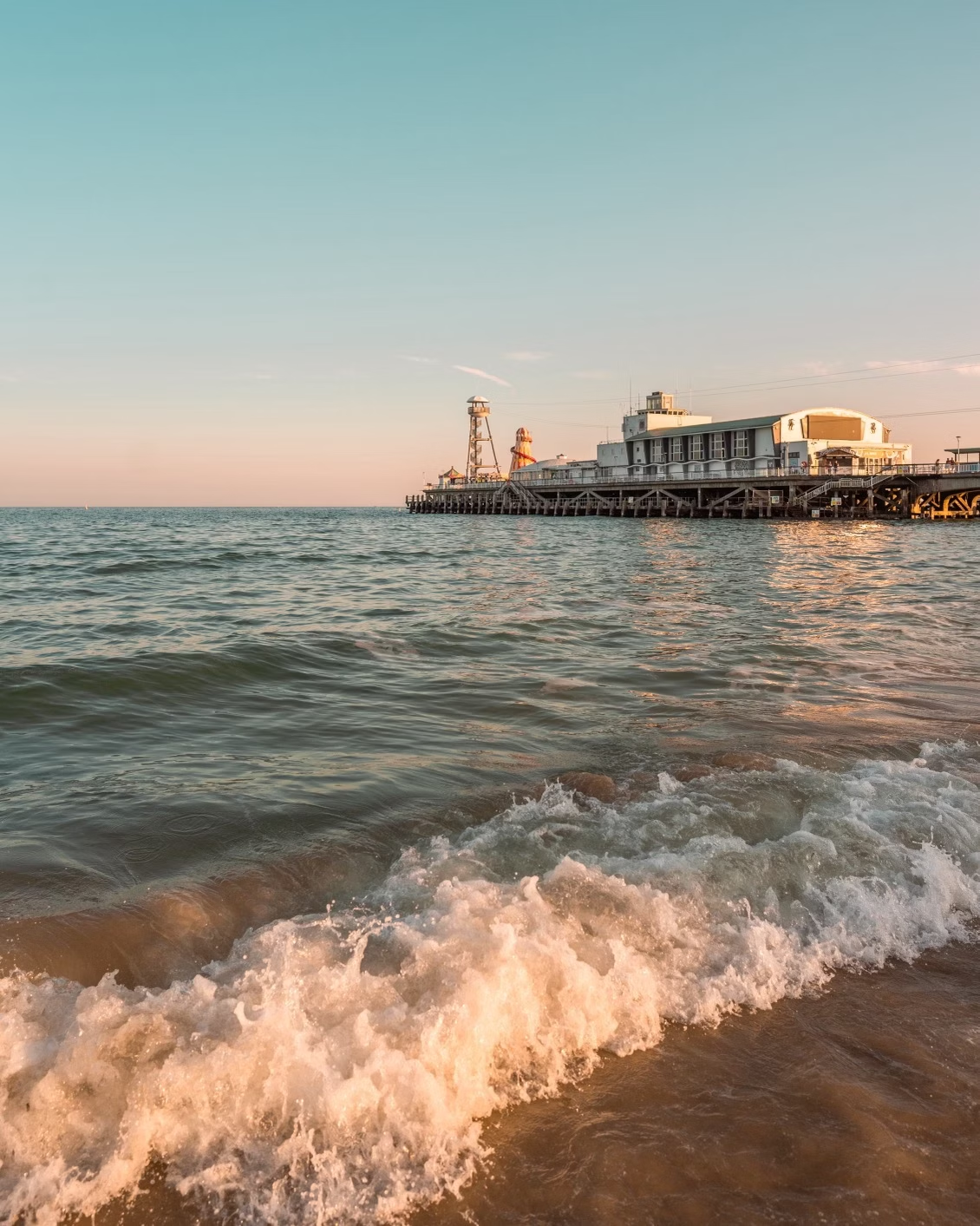
This is the stretch either side of Bournemouth Pier, backed by the Lower Gardens and the town centre. It’s the beach on the postcards, and there’s a reason for that: the sand is genuinely soft and pale, the bay has its own sheltered microclimate that keeps the sea a degree or two warmer than you’d expect on the south coast, and in 2025 it was ranked the 12th best beach in the world by TripAdvisor’s Traveller’s Choice awards — the year before that, it took the number one spot in the UK.
Interestingly, the central beach itself doesn’t carry a Blue Flag in 2026 — it holds a Seaside Award instead, while the quieter chines either side (more on those below) picked up the Blue Flags.
Doesn’t mean the water’s worse; the awards are assessed on slightly different criteria and it’s common for busy central beaches to sit in the Seaside Award tier while quieter neighbours get the Blue Flag. Worth knowing if you’re the type who checks these things.
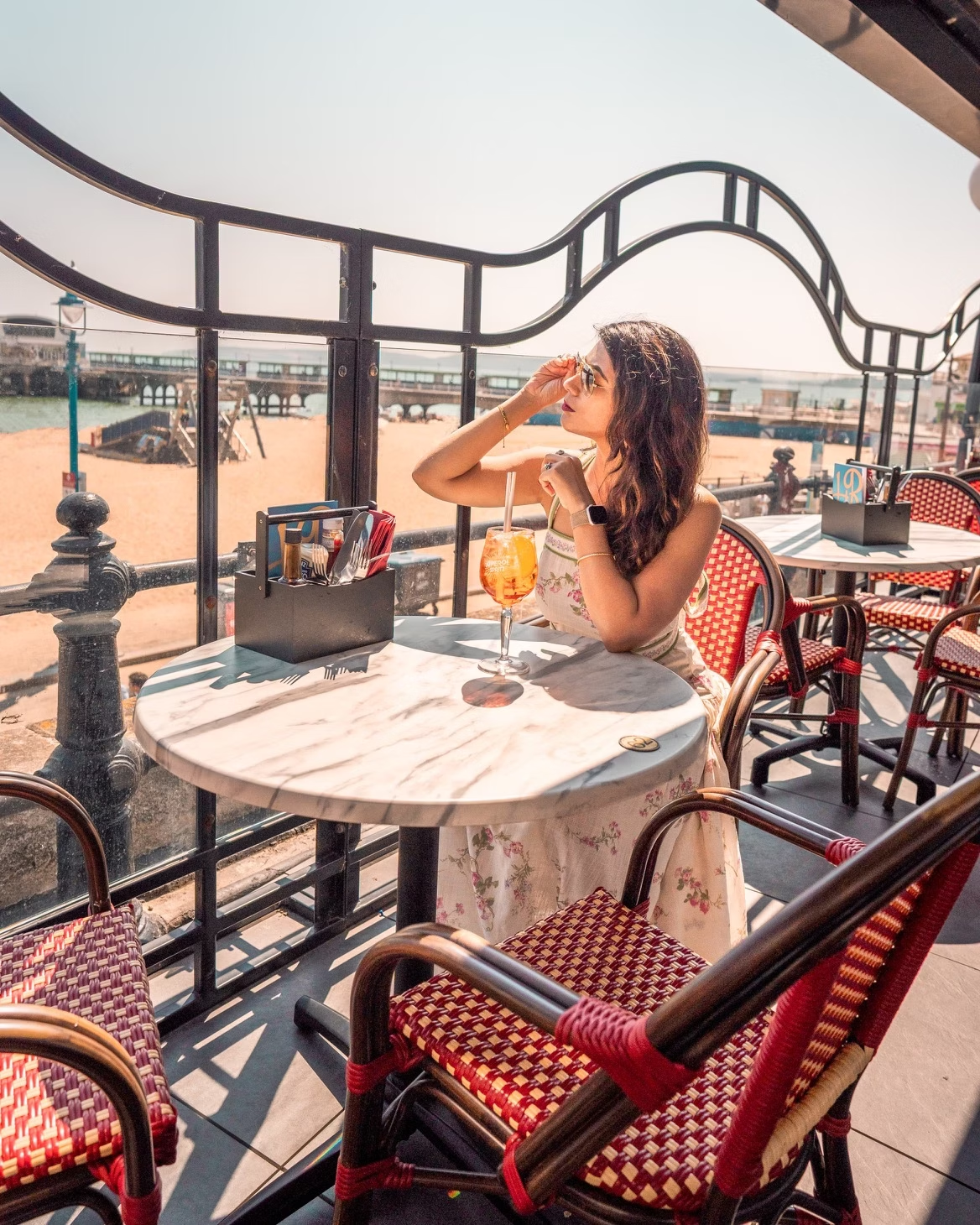
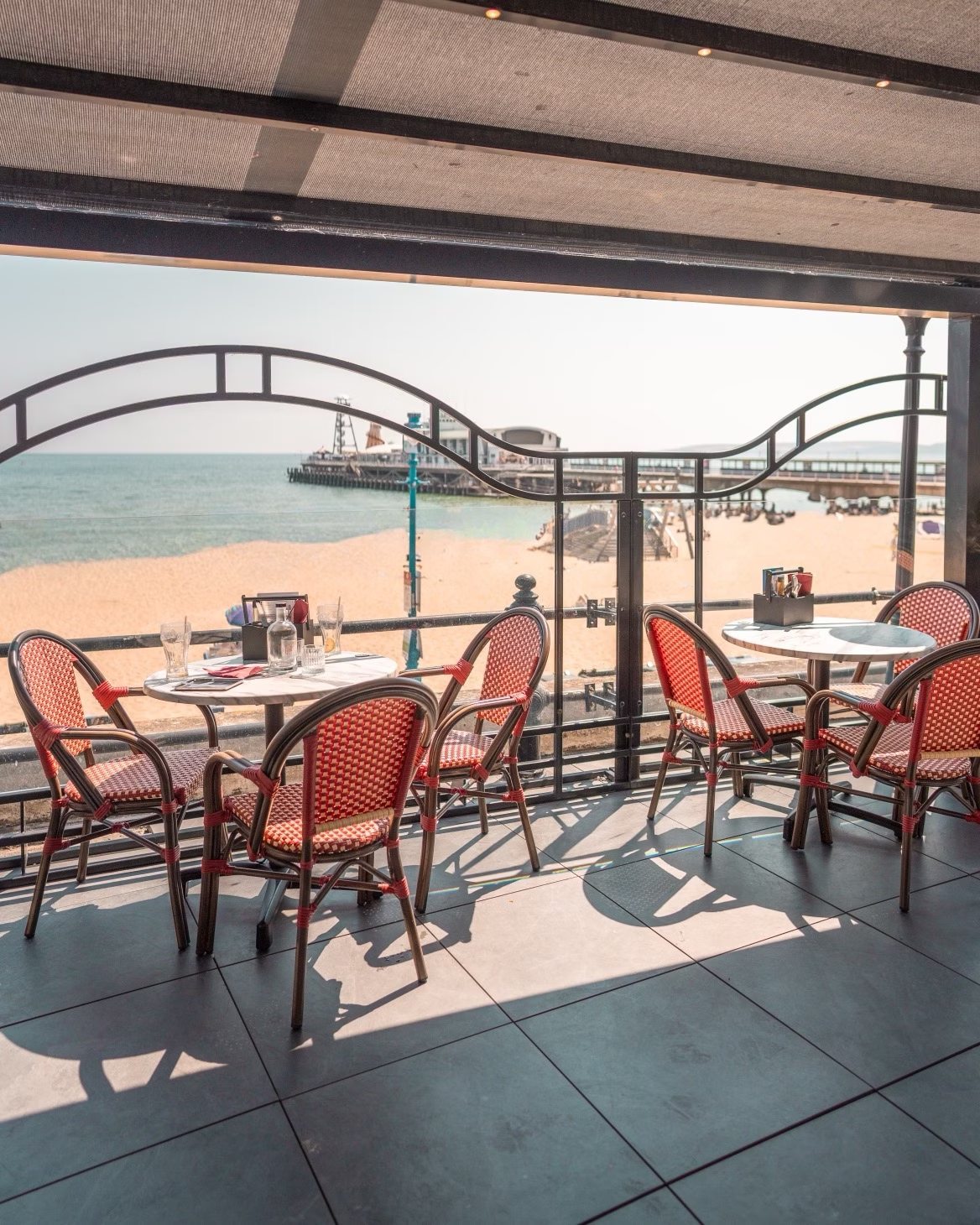
What’s actually there:
- the Pier itself (with an adventure park and zip line if you’ve got kids to tire out),
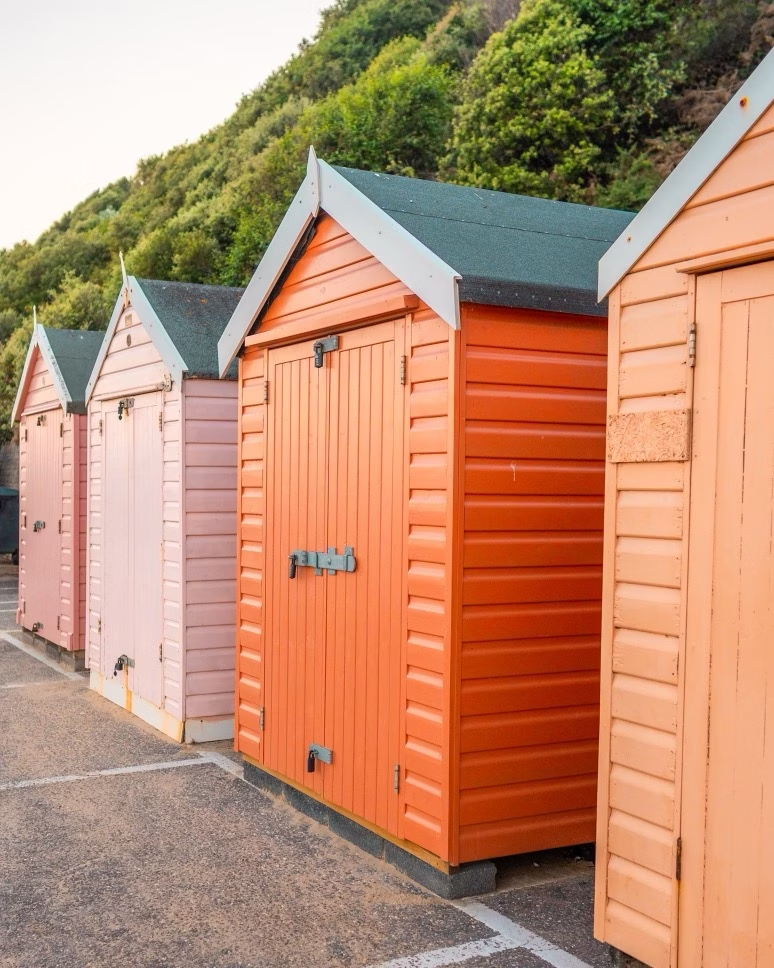
- colourful beach huts backing onto the Undercliff Promenade,
- the usual seafront cafés and kiosks, pedalos and jet ski hire in summer,
- and RNLI lifeguards patrolling with flags during the main season.
Getting there and parking: this is the busiest section by far, so the seafront car parks (Pier Approach, Westover Road) fill up fast on a hot day — arrive before 10am in summer or expect to circle. The park-and-ride on the outskirts is genuinely worth using if you’re driving in during peak season.
Dogs: banned from the sand here between 1 May and 30 September. You can walk them on the promenade on a lead during that window, but not down on the beach itself.
Go here if: it’s your first visit, you want food and toilets within easy reach, or you’re travelling without a car and need to walk straight off the train or bus onto sand.
Skip it if: you want space to yourself in peak summer — walk towards Boscombe or Alum Chine instead.
Location: Bournemouth Beach


2. Alum Chine — the quieter classic
A short walk west of the pier, Alum Chine is what the central beach would be if you took away about 70% of the people. Same soft sand, same sea, noticeably fewer beach towels fighting for space. The chine itself — the wooded valley leading down from the clifftop — is worth a wander in its own right; there’s a small subtropical garden partway down that most visitors walk straight past.
It’s popular with families who want the beach experience without the central-strip crush, and there’s a beach office here if you’re hiring a hut for the day.
Dogs: same rule as the central beach — no dogs on the sand 1 May to 30 September. The dog-friendly zone starts just west of here, from the Alum Chine Beach Office toward Branksome Chine (technically into Poole).
Go here if: you’ve got small children and want a shorter, calmer day than the main beach delivers.
3. Durley Chine — the Blue Flag pick
Durley Chine sits between Alum Chine and the central beach and holds one of the six Blue Flags awarded to the BCP coastline in 2026 — the internationally recognised standard for water quality, safety and environmental management. If water quality is genuinely a deciding factor for you (swimming with kids, for instance), this is one of the beaches to head for specifically.
It’s got the same broad, flat sand as the central strip but sits slightly apart, so it tends to feel calmer even during the school holidays. There’s a beach office, toilets, and easy step access from the clifftop.
Dogs: the year-round dog-friendly zone runs from Middle Chine through to Durley Chine, so this is actually one of the better options if you want a proper Blue Flag beach that also allows dogs outside the main summer restriction — check the signage on the day, as the exact boundary point can shift slightly.
Go here if: accessibility matters, or you want facilities without full main-beach crowds.
4. Boscombe Beach — for surfing and a livelier scene
East of the pier, past Boscombe Pier, this is where Bournemouth’s small but genuine surf scene lives. Boscombe has an artificial reef just offshore designed to improve the waves, and there’s a surf school here if you’ve never tried it — it’s a far gentler introduction than most UK surf spots.
The vibe is a notch more relaxed and a bit younger than the central beach — more beach bars, more people actually in the water rather than just next to it. Urban Reef, right on the beach, is one of the better food stops on this whole stretch if you want something more interesting than a 99 flake.
Dogs: no dogs on the main sand during summer, same as central Bournemouth.
Go here if: you’re travelling with teenagers, want to try surfing or bodyboarding, or fancy a bit more energy in your beach day.
5. Southbourne Beach — the locals’ choice
Further east again, Southbourne has a different feel entirely — less resort, more residential seaside town. It’s popular with people who actually live in the area, which tends to be a decent sign. Rows of beach huts line the prom, there’s a good stretch of genuinely quiet sand even in August, and it’s noticeably less commercial than the central beaches.
This is also one of the year-round dog-friendly zones (east of Fisherman’s Walk through to Southbourne), which makes it the go-to for a lot of dog owners who’d otherwise be shut out of the main beach all summer.
Getting there: it’s a fair walk or a short drive/bus from the town centre — this isn’t the beach to pick if you want to combine it with browsing the shops, but it’s exactly right if you want space to actually spread out.
Go here if: you want the “local” Bournemouth beach experience, or you’re visiting with a dog in summer and don’t want to plan your day around the seasonal ban.
6. Fisherman’s Walk — quiet, and properly dog-friendly
Sitting between Southbourne and the central beaches, Fisherman’s Walk picked up a Blue Flag in 2026 and sits inside the year-round dog-friendly zone, which is a genuinely useful combination — a good number of Bournemouth’s dog-friendly stretches don’t have Blue Flag status, and vice versa. There’s a cliff lift here (one of the old Victorian ones dotted along this coast) if you’d rather not walk down and back up the chine on a hot day.
It’s a good pick if your ideal day is a long coastal walk with the dog rather than a full afternoon parked on a towel.
Go here if: you want watersports without the Boscombe crowd, or you just want a beach that isn’t shoulder-to-shoulder in summer.
7. Hengistbury Head — for something completely different
If lying on a towel isn’t really the point for you, Hengistbury Head, right at the eastern end of the Bournemouth stretch, is worth the trip. It’s a nature reserve and headland rather than a conventional beach — Iron Age earthworks, a nature trail, and views back along the whole curve of the bay from the top that put the rest of this list into perspective. There’s a small beach at the foot of it too, and it’s dog-friendly year-round.
Take the little land train from Southbourne if you don’t fancy the walk out — it’s slow, slightly rattly, and exactly the kind of thing that makes a day here feel like a proper outing rather than just another beach visit.
It also happens to be your access point for one of the best-kept secrets on this coastline — which brings us to the last one.
8. Sandbanks — worth the detour
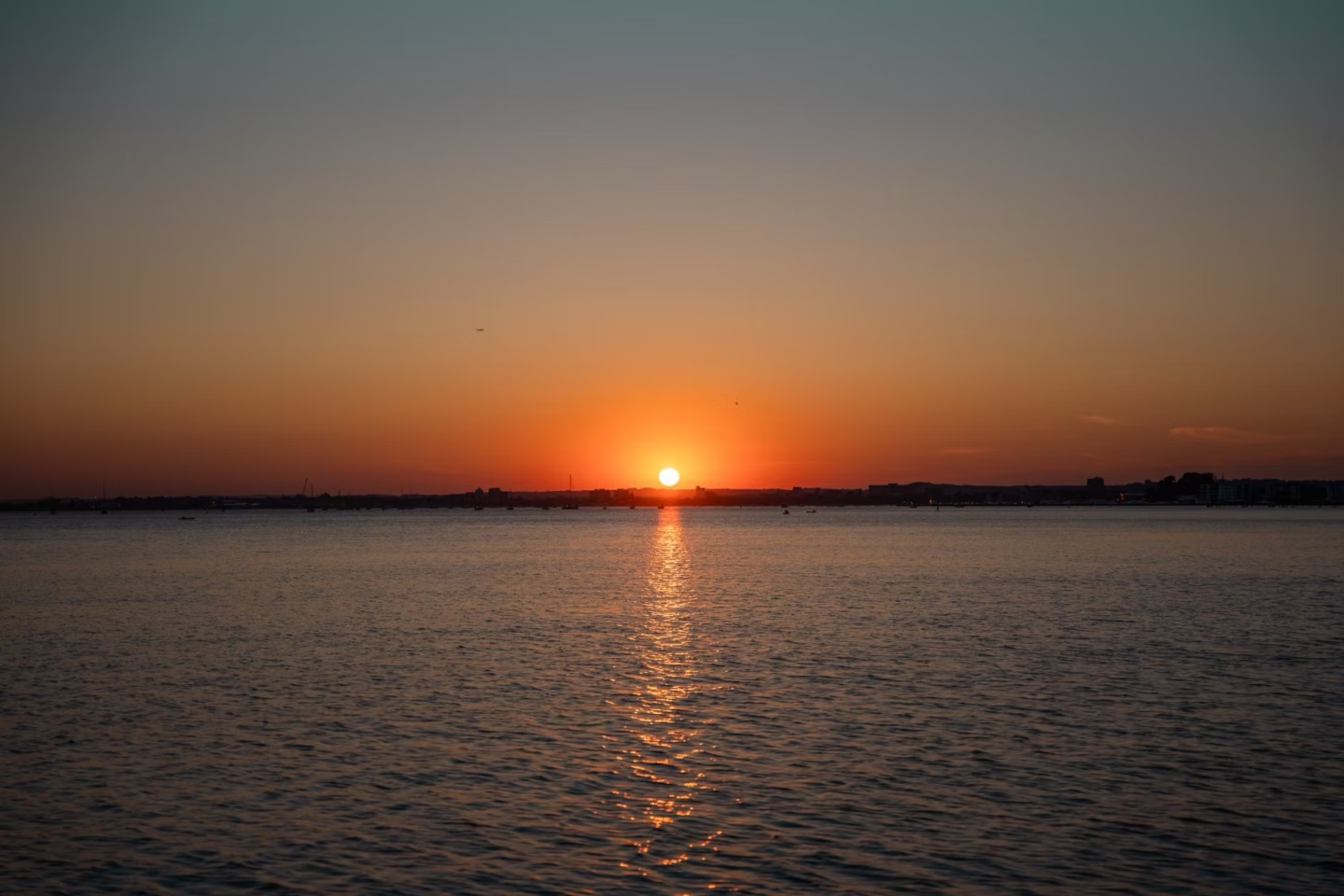
Technically this sits beyond Bournemouth’s boundary, at the mouth of Christchurch Harbour, but it comes up constantly in searches about Bournemouth’s beaches and it deserves a mention because it’s genuinely worth the extra effort. You reach it either by a short ferry from Mudeford Quay or by walking (or taking the land train) roughly a mile from the Hengistbury Head car park.
It’s held Blue Flag status every single year the award has existed — 39 consecutive years as of 2026, which nobody else on this coastline can claim.
Sandbanks is famous for two things: property prices (it’s routinely named among the most expensive stretches of real estate in the world per square foot) and the chain ferry that shuttles cars and pedestrians across to the Studland side of Poole Harbour. Watching it come and go is a genuinely nice way to spend twenty minutes with an ice cream.
Dogs: allowed on the western end of the Sandbanks promenade through to Haven Point by the chain ferry, year-round.
Go here if: you want a proper full-day outing, don’t mind a bit of planning around ferry or land train times, and want to see the beach hut phenomenon that made local headlines.


Beyond Bournemouth: three beaches worth the day trip
None of these three are Bournemouth beaches, strictly speaking, and I’ll say that clearly rather than pretend otherwise. But if you’re staying in the area for more than a couple of days, they’re close enough that skipping them would be a shame — and they come up constantly in “what to do near Bournemouth” searches for good reason.
Durdle Door
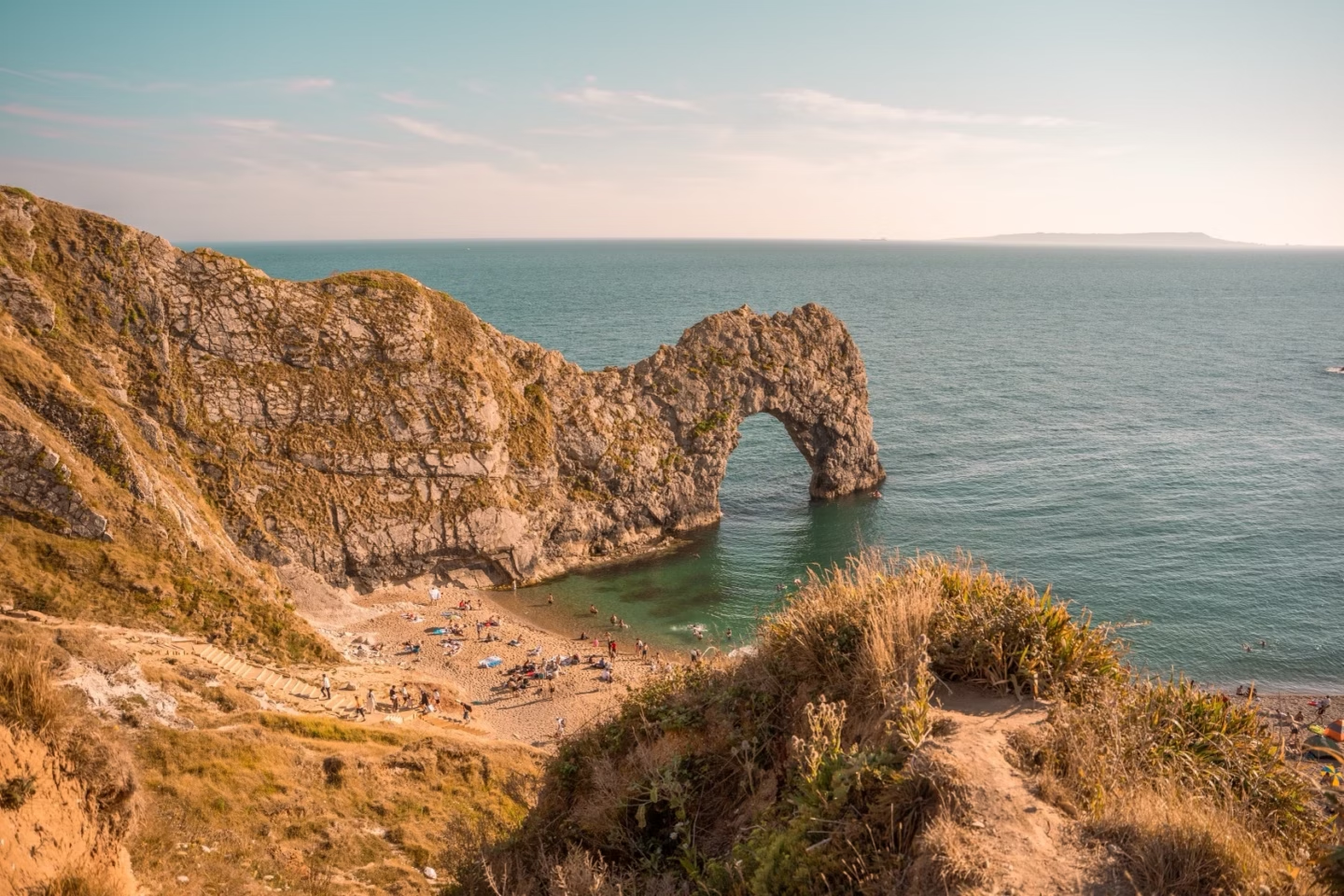
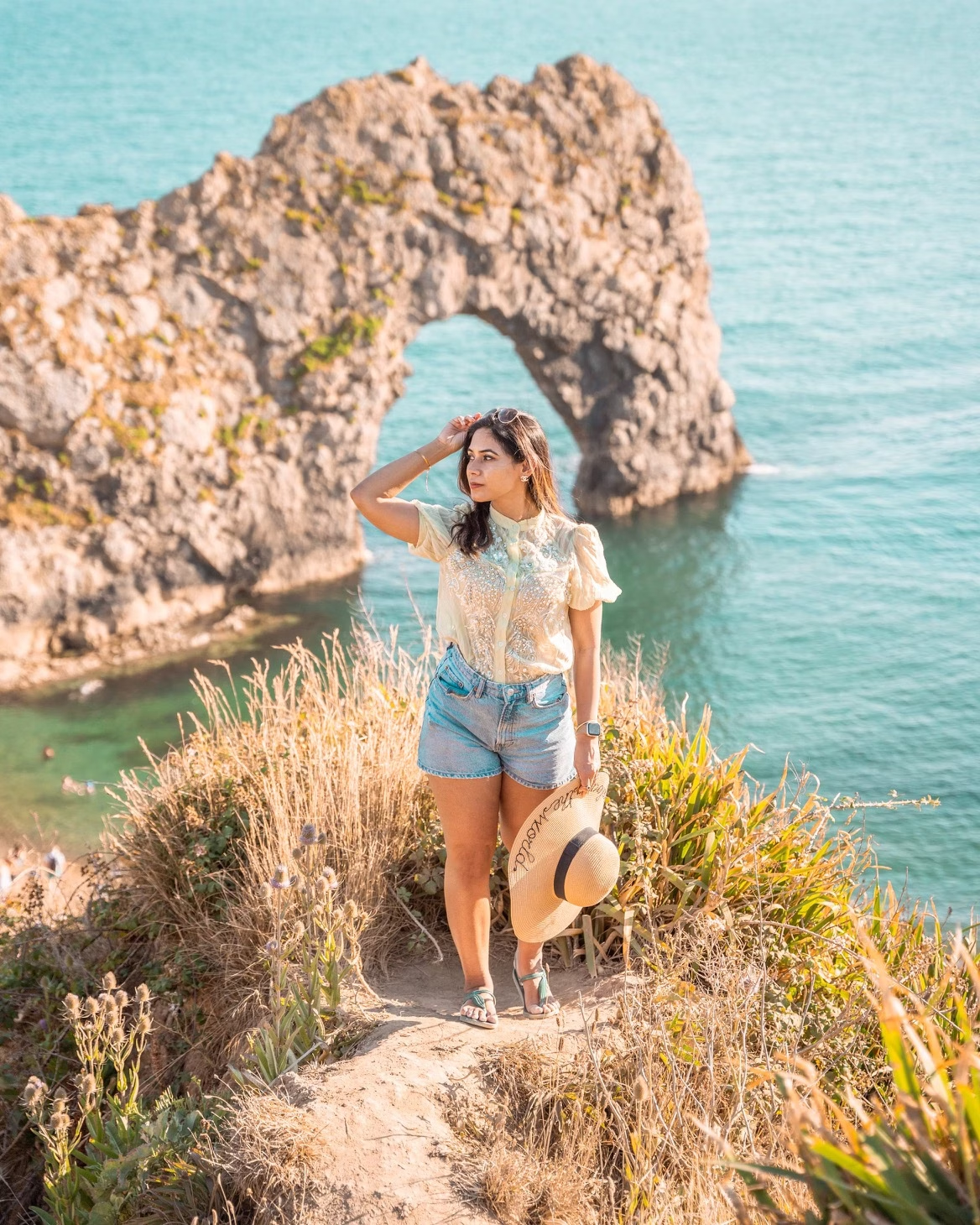
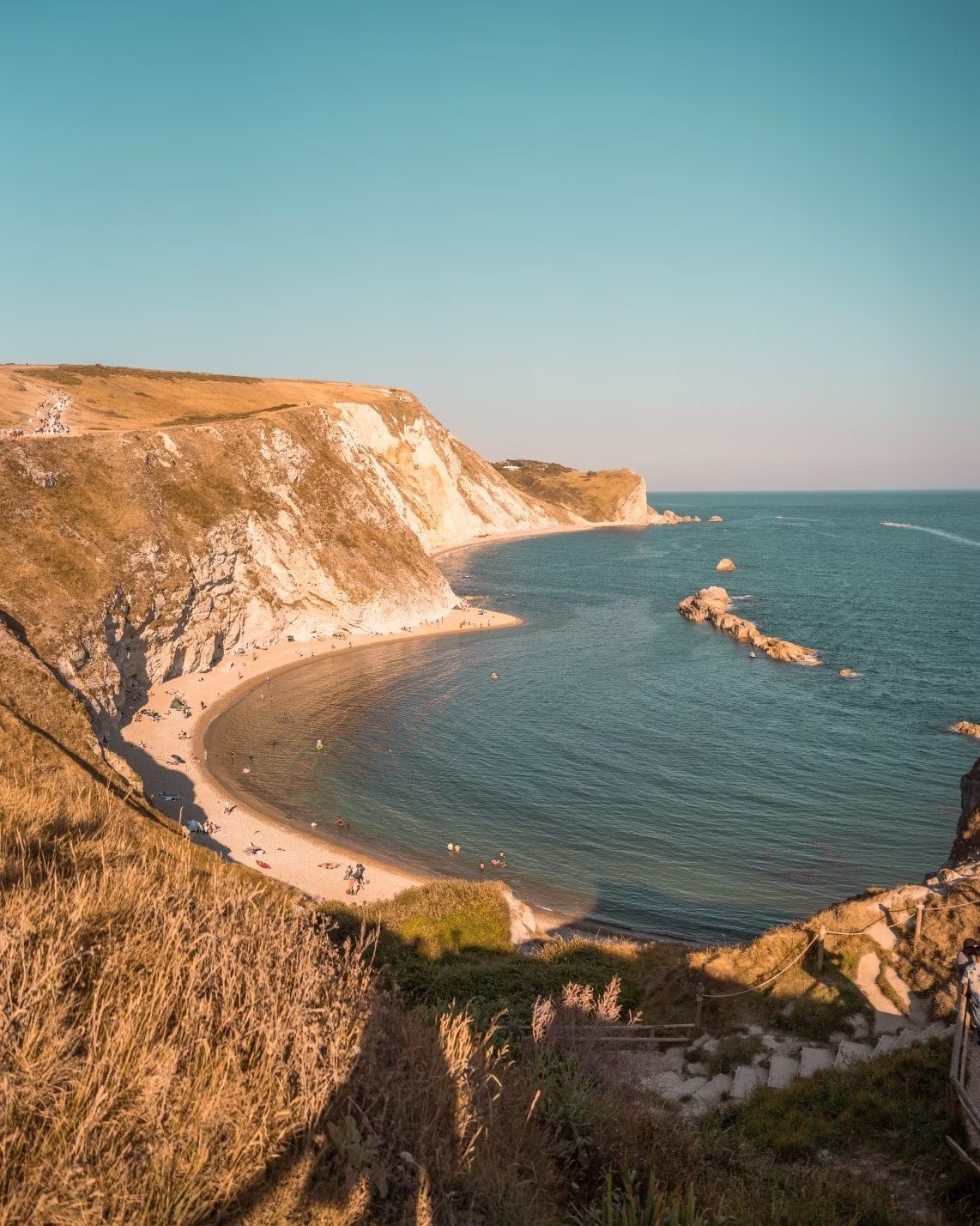
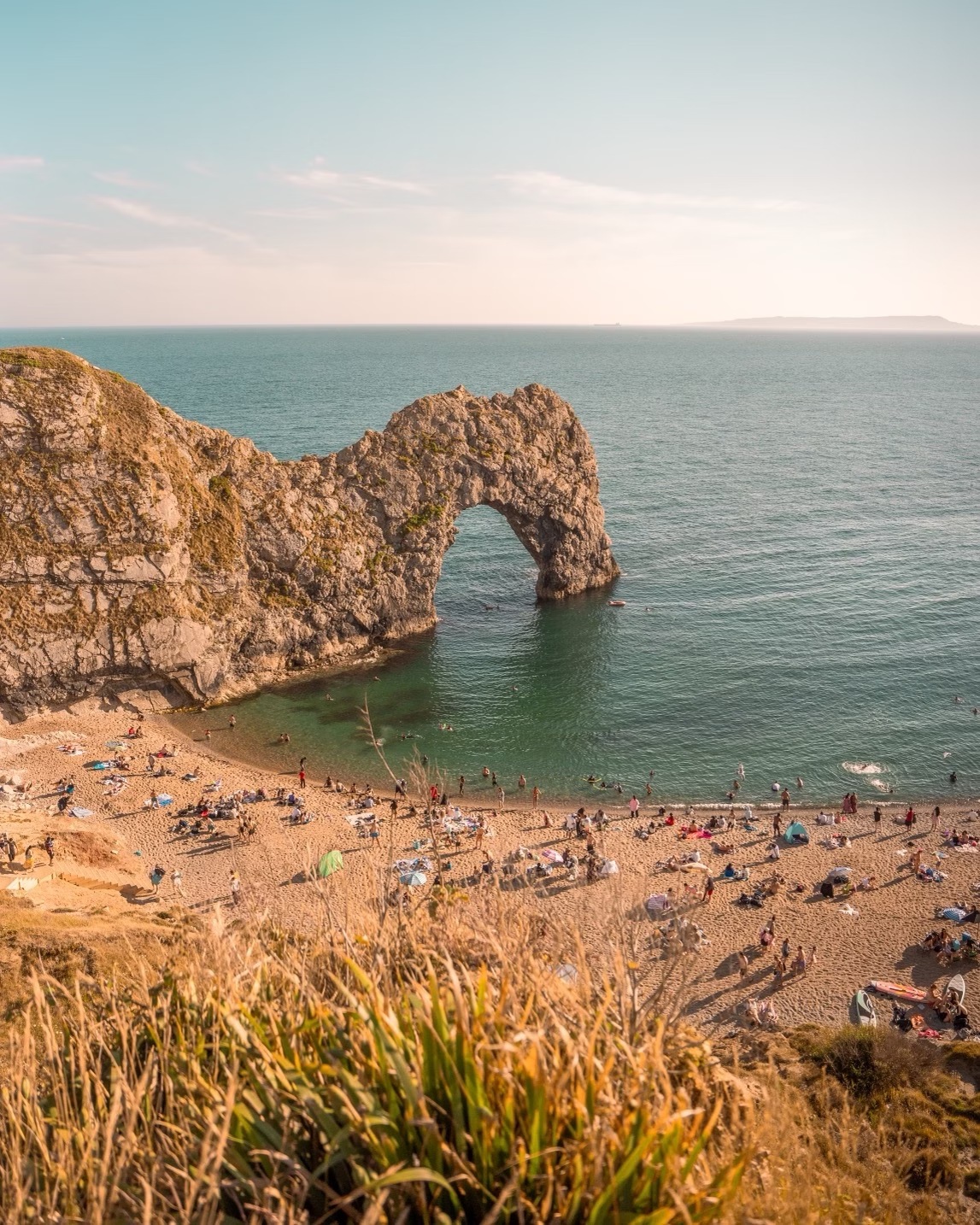
Durdle Door is the limestone arch you’ve almost certainly seen in a photo of Dorset without knowing the name — a natural rock doorway standing in the sea, part of the Jurassic Coast World Heritage Site. It’s about 24 miles from Bournemouth, roughly a 45-minute drive via Wareham and Wool.
Here’s what most articles don’t tell you: the clifftop car park now generally needs pre-booking through the JustPark app in peak season, spaces are limited, and it’s not free — expect around £5 for up to four hours or £10 for the full day. From the car park, it’s a genuinely steep walk down (roughly 900 metres, partly on wooden steps) to the beach itself, and it is not manageable with a pushchair or for anyone with limited mobility. There are no facilities down on the sand, so sort out food, water and toilets before you head down. Swimming is possible but take care around the rock formation known as The Bull just offshore — rip currents have caught people out there.
Go here if: you want the single most photographed view in Dorset and don’t mind a bit of a trek to get to it.
Lulworth Cove
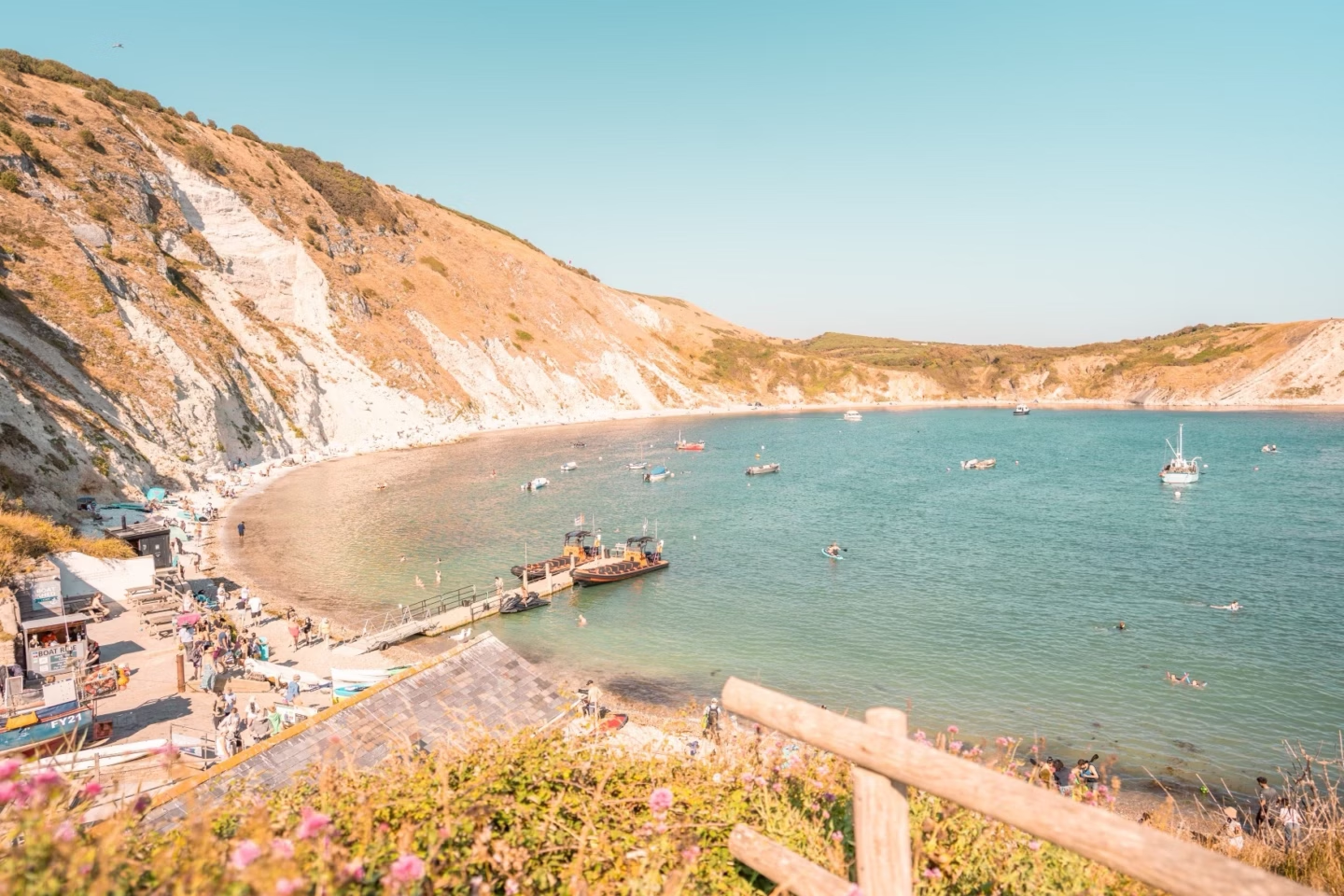
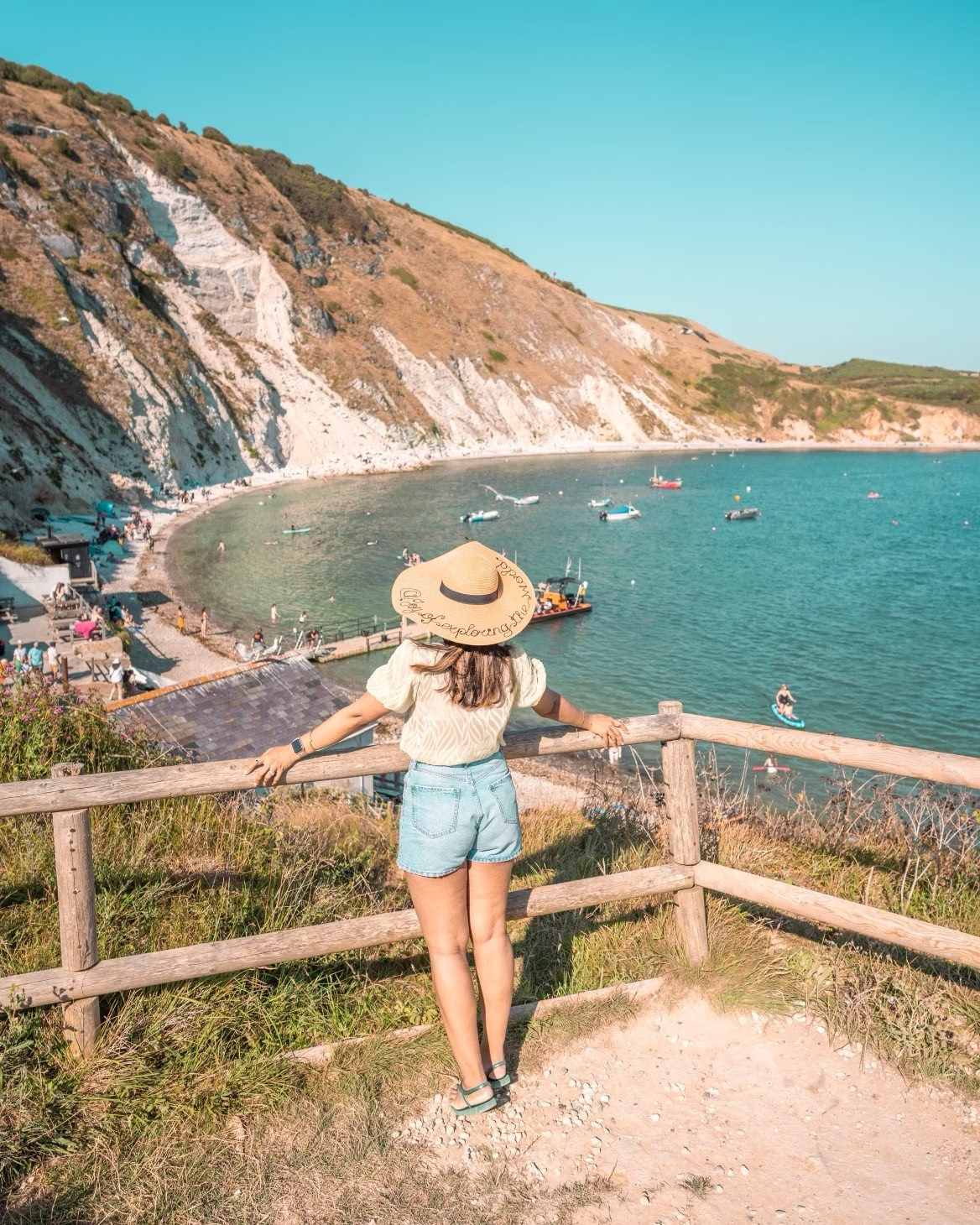
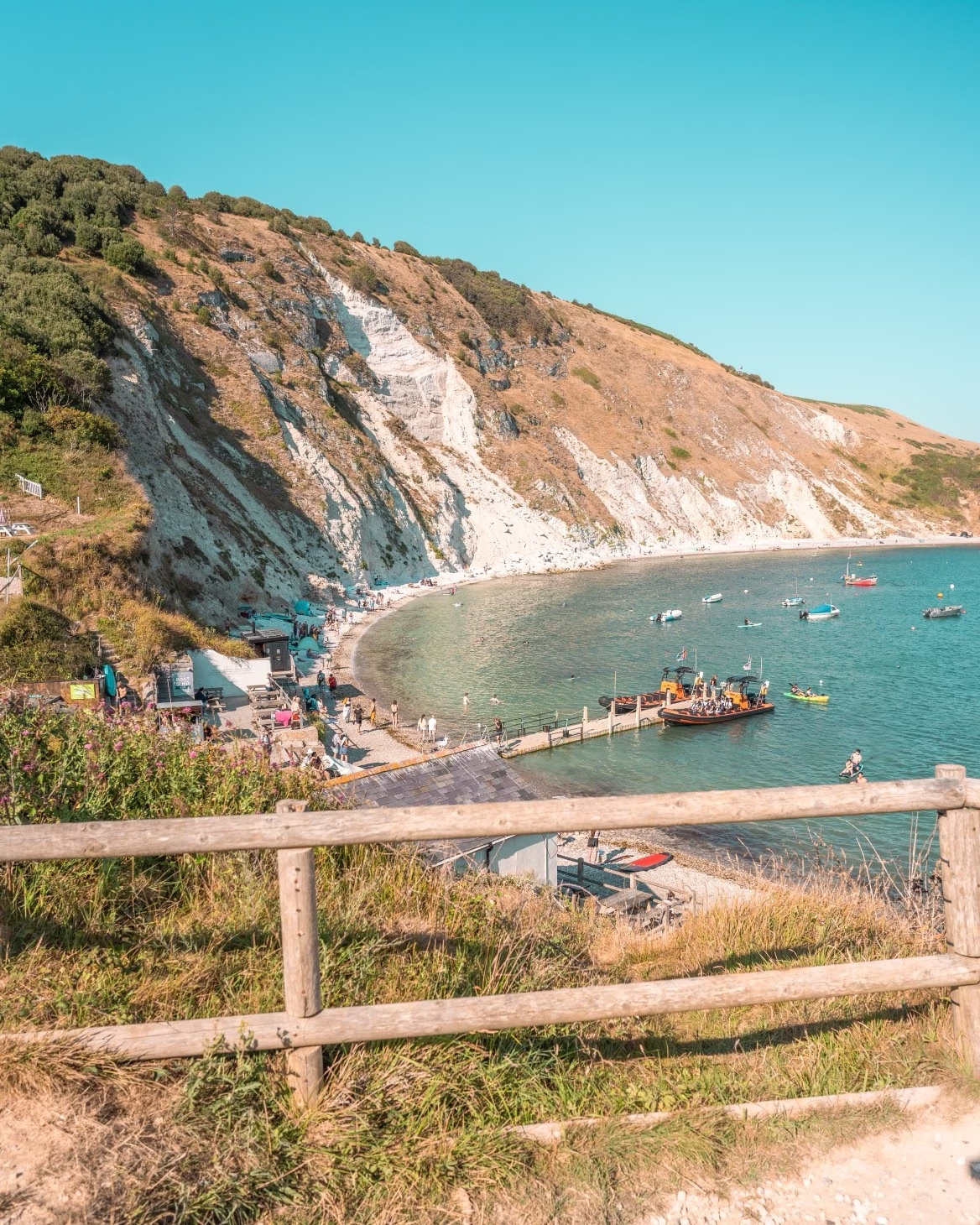
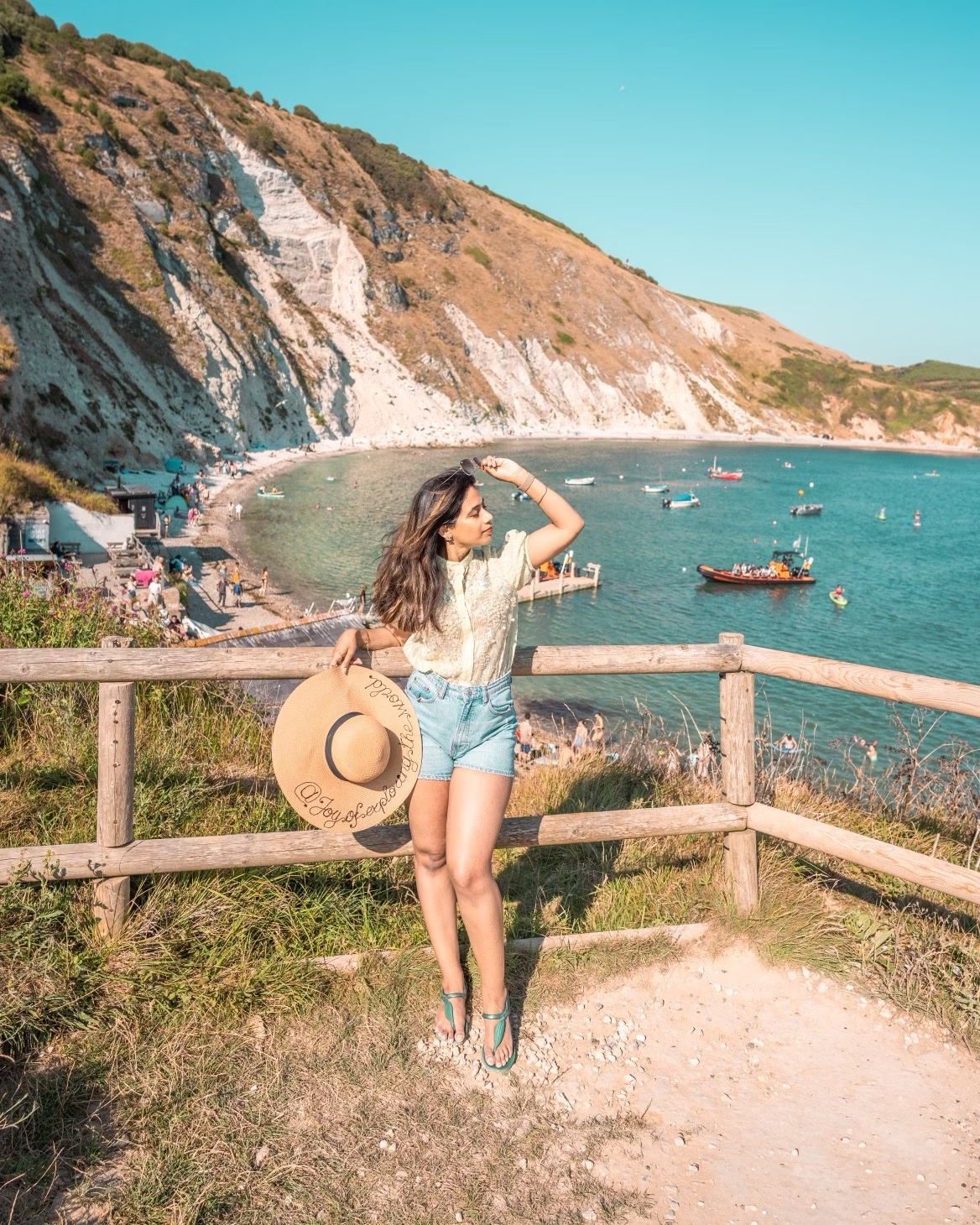
Lulworth Cove sits about ten minutes’ drive from Durdle Door, or a 30-to-40-minute walk along the coast path if you fancy stretching your legs between the two (it’s an easy, well-marked route, just over a mile each way). Where Durdle Door is dramatic, Lulworth Cove is calm — an almost perfectly circular bay with clear, sheltered water that’s genuinely good for swimming, and a pebble beach that reveals rock pools at low tide, which makes it a solid pick if you’ve got kids keen on crabbing or fossil hunting.
Most people visit both in the same day, and it’s a sensible way to do it — one combined parking ticket often covers both car parks, and the walk between them is one of the best short stretches of the whole Jurassic Coast.
Go here if: you want a calmer swim than Durdle Door offers, or you’re combining both into one day out.
Studland Bay
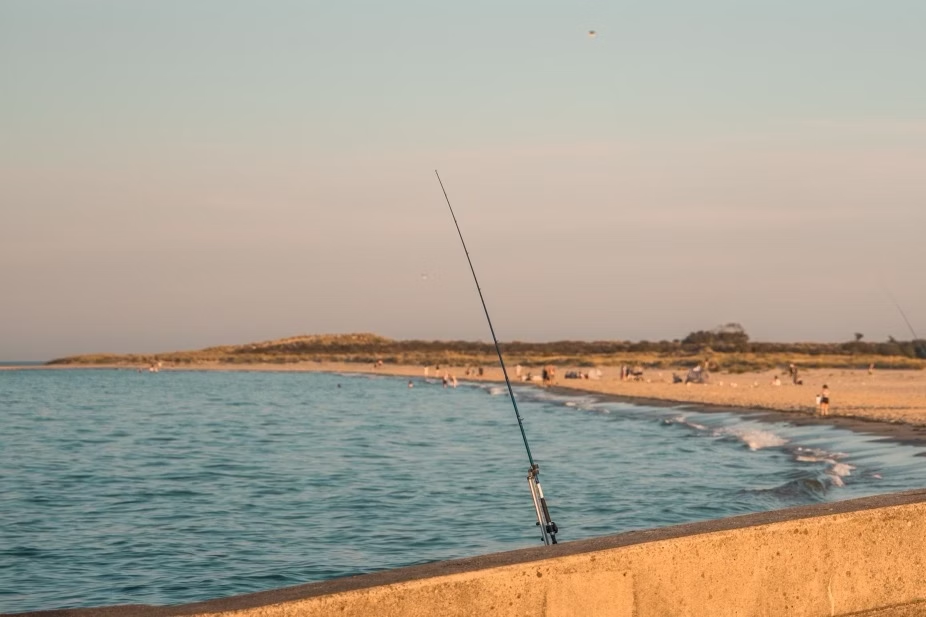
Studland Bay is a different direction entirely — instead of heading west towards Wareham, you get there via the Sandbanks chain ferry (a genuine car-and-passenger ferry that crosses the mouth of Poole Harbour every 20 minutes), then a short drive or walk on the other side. It’s about 10 miles from central Bournemouth, though the ferry queue in summer can add a fair bit of time.
This is National Trust land, and it’s a completely different kind of beach experience: four connected beaches (Shell Bay, Knoll Beach, Middle Beach and South Beach) running for four miles along dune-backed coastline, with views across to the chalk stacks of Old Harry Rocks and the Isle of Wight. It’s wilder and less developed than the central Bournemouth beaches, popular for watersports, walking, and — worth knowing before you turn up with young kids — the northern stretch near Knoll Beach includes Britain’s most well-known naturist beach section, clearly signed and separate from the family areas. Dogs are welcome year-round here, on a lead during the summer months.
Go here if: you want a wilder, more natural beach with genuinely good walking, or you’re travelling with a dog in peak summer and want more space than Southbourne offers.
Worth knowing: because Studland is reached via the Sandbanks ferry rather than the Wareham road, it doesn’t combine easily into the same day as Durdle Door and Lulworth Cove — treat it as its own day trip rather than trying to squeeze all three in together.
Practical stuff before you go
- Beach huts: there are more than 250 along the Bournemouth and Poole seafront, in a mix of styles from classic huts to modern electric pods. Short-term hire (for visitors, not just residents) starts from around £119 a week in season, and there’s also daily hire from about £19 — but daily huts are walk-in only, booked in person at the Tourist Information Centre near Pier Approach, so you can’t reserve one in advance if you’re only after a single day.
- Dogs — the rule that catches people out: across nearly all of Bournemouth’s main bathing beaches, dogs are banned from the sand between 1 May and 30 September, though they’re allowed on a lead on the promenade above. Outside that window — 1 October to 30 April — dogs are welcome on every beach along the coast. If you’re visiting in summer with a dog, plan around the year-round zones instead: parts of Southbourne, Fisherman’s Walk, Durley Chine, Hengistbury Head, and the western end of Sandbanks. Fines for ignoring the signage can run up to £1,000, so it’s not worth chancing it on the main strip.
- Parking: the closer you are to the pier, the earlier you need to arrive in summer. Beaches further out — Southbourne, Alum Chine, Hengistbury Head — are far easier to park near even in peak season.
- Getting between beaches without a car: the land train and the old cliff lifts (several still run seasonally between the clifftop gardens and the promenade) are a genuinely pleasant way to move along the seafront without walking the whole seven miles.
- Best time to visit: July and August for swimming weather and the fullest beach hut availability, but if crowds bother you more than a slightly cooler sea, late May, June, or September give you nearly the same beach with a third of the people.
- Lifeguard cover. Bournemouth East, Bournemouth West and Boscombe East are patrolled roughly from late March to late September. Alum Chine, Durley Chine, Boscombe West, Fisherman’s Walk and Southbourne run a shorter lifeguard season, typically late May to early September, usually 10am–6pm. Always swim between the red and yellow flags where they’re flying, and if in doubt, ask the lifeguards — the RNLI patrols this coastline for a reason.
- Blue Flag and Seaside Awards. Bournemouth, Christchurch and Poole hold a strong run of Blue Flag and Seaside Award beaches, but the exact list is reassessed every single year, and which beaches hold which award can shift — a beach that had a Blue Flag last summer might carry a Seaside Award instead this year, or vice versa. Both are genuine marks of quality (covering water testing, safety and facilities), so don’t read too much into which specific award a beach happens to hold in any given year — check the current list on the official BCP Council site closer to your visit if it matters to you.
Frequently asked questions
Is Bournemouth beach sandy?
Yes — it’s soft, fine golden sand along the entire seven-mile stretch, not shingle or pebbles like a lot of the south coast further east.
Which Bournemouth beach is best for families?
The central beach by the pier for the full day-out experience (huts, food, the pier itself), or Alum Chine if you want the same sand with far less crowding.
Can you take dogs to Bournemouth beaches?
Not on the main beach between 1 May and 30 September. Outside those dates, dogs are allowed everywhere. Within summer, head to Southbourne, Fisherman’s Walk, Durley Chine, Hengistbury Head, or the western end of Sandbanks, which all have year-round dog access.
Which Bournemouth beaches have Blue Flag status in 2026?
Six beaches along the BCP coastline hold Blue Flags for 2026: Sandbanks, Shore Road, Canford Cliffs, Durley Chine, Fisherman’s Walk, and Highcliffe Beach. The central Bournemouth beach itself holds a Seaside Award rather than a Blue Flag this year.
Is Bournemouth beach free to visit?
Yes, the beach itself is free — you only pay for parking, a beach hut if you want one, or activities like pedalos and jet skis.
How much does a beach hut cost in Bournemouth?
Short-term hire starts from roughly £119 a week in season, with daily hire (walk-in only) from around £19, subject to availability and time of year.
Which Bournemouth beach is quietest?
Hengistbury Head and Mudeford Sandbank are the two least crowded options, followed by Southbourne and Fisherman’s Walk.
Can I get to Bournemouth’s beaches without a car?
Easily. The promenade connects every beach on this list except Mudeford Sandbank, and Bournemouth’s train station and bus network both drop you within walking distance of the central beaches.
Can I visit Durdle Door from Bournemouth as a day trip?
Yes, it’s about a 45-minute drive (roughly 24 miles) via Wareham and Wool, and it’s a genuinely popular day trip from Bournemouth — several coach tours run the route if you’d rather not drive. Just book clifftop parking ahead in summer, as spaces are limited.
Is Studland Bay the same as Sandbanks?
No, and they’re easy to mix up because they face each other. Sandbanks is the sandy peninsula on the Poole/Bournemouth side of the harbour mouth. Studland Bay is across the water on the Purbeck side, reached via the Sandbanks chain ferry.
Can I do Durdle Door, Lulworth Cove and Studland Bay all in one day?
Not comfortably. Durdle Door and Lulworth Cove sit close together and combine well into a single day. Studland Bay is a different direction (via the Sandbanks ferry) and is better treated as a separate trip.
Seven miles of Bournemouth coastline is already a lot of choice, and that’s before you factor in what’s within reach just beyond it. Central and convenient, wild and quiet, or a proper day trip out to the Jurassic Coast — there’s a version of this coastline for whatever kind of day you’re after.
Topics that may interest you

Dining in Bournemouth: The Best Restaurants to Try in 2026
Best Beaches in Bournemouth: The Complete Ranked Guide (2026)

Best Beaches in the UK: 26 Beautiful Beaches to Visit in 2026

16 Best Things to Do in Notting Hill, London


Leave a Reply