Every spring, Tokyo transforms into a soft pink dream. If you’re searching for the best Tokyo cherry blossoms, you’ll quickly realize the city has hundreds of places to see sakura. But after many seasons photographing cherry blossoms in London & Tokyo and exploring the parks at sunrise and sunset, I’ve learned that timing, angles, and knowing where the crowds gather makes all the difference.
This guide covers the best Tokyo cherry blossoms spots, the ideal time to visit, photography angles that actually work, and practical ways to enjoy sakura in Tokyo without getting swallowed by the crowds.
For 2026, the Tokyo cherry blossom forecast predicts the first bloom around March 21, with full bloom hitting its peak between March 28 and April 4.
Here is my insider’s guide to the best spots, how to beat the crowds, and the exact shots you need for your feed.
Best Time to See Tokyo Cherry Blossoms
Tokyo cherry blossoms usually bloom between late March and early April. Full bloom (called “mankai” in Japan) typically lasts about one week.
Typical Tokyo cherry blossoms timeline:
• Late March – First blossoms begin opening
• Early April – Peak Tokyo cherry blossoms
• 5–7 days later/ one week later – Petals begin falling (arguably the most beautiful stage)
For the best experience, visit early morning between 6:00–8:00 AM. Most Tokyo cherry blossoms spots become extremely crowded after 10 AM, especially on weekends.
Another beautiful moment is during the evening when many parks illuminate the Tokyo cherry blossoms with lanterns. This is known as “yozakura” (night sakura).
Best Cherry Blossoms Tokyo Locations
1. Shinjuku Gyoen: The Variety King
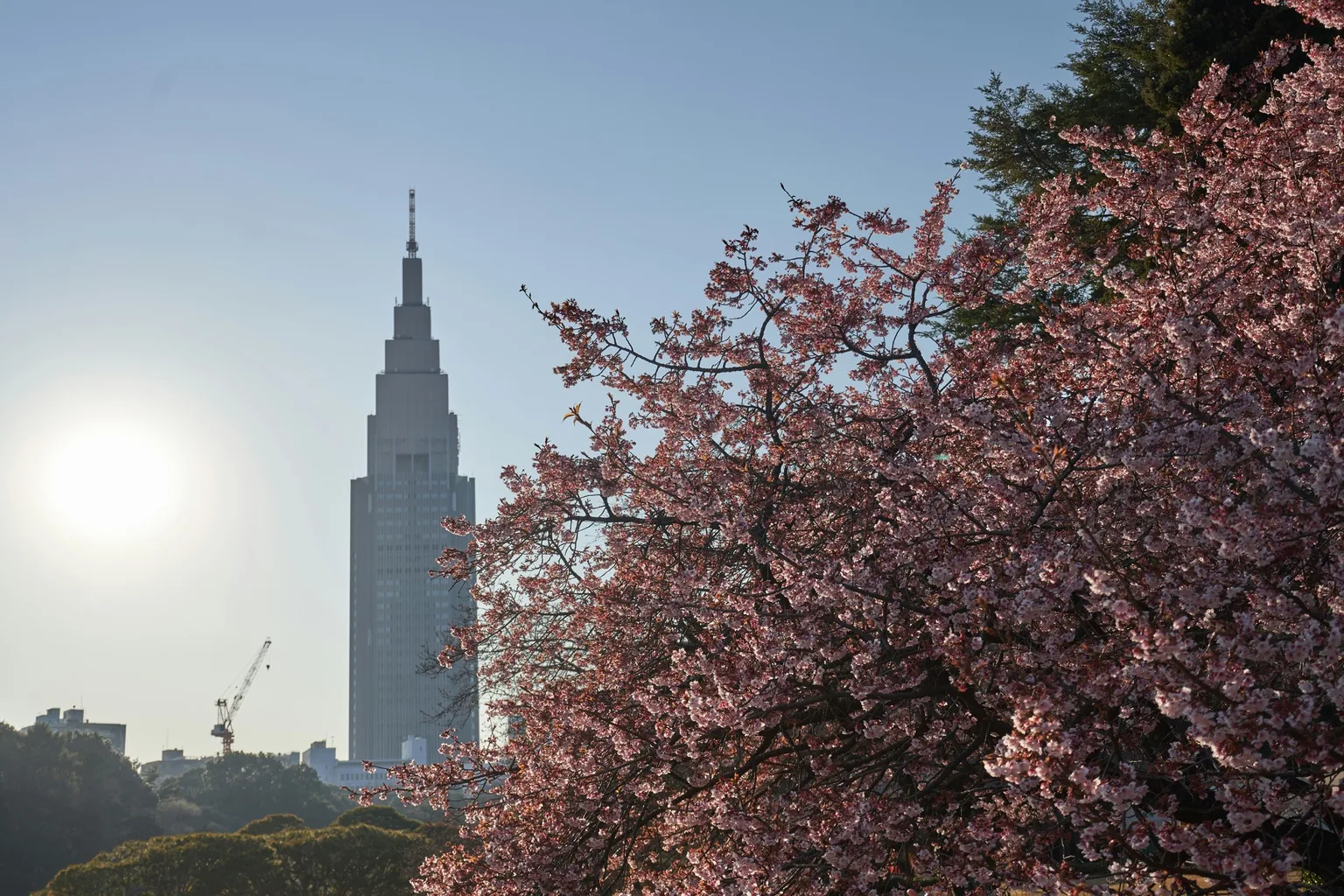
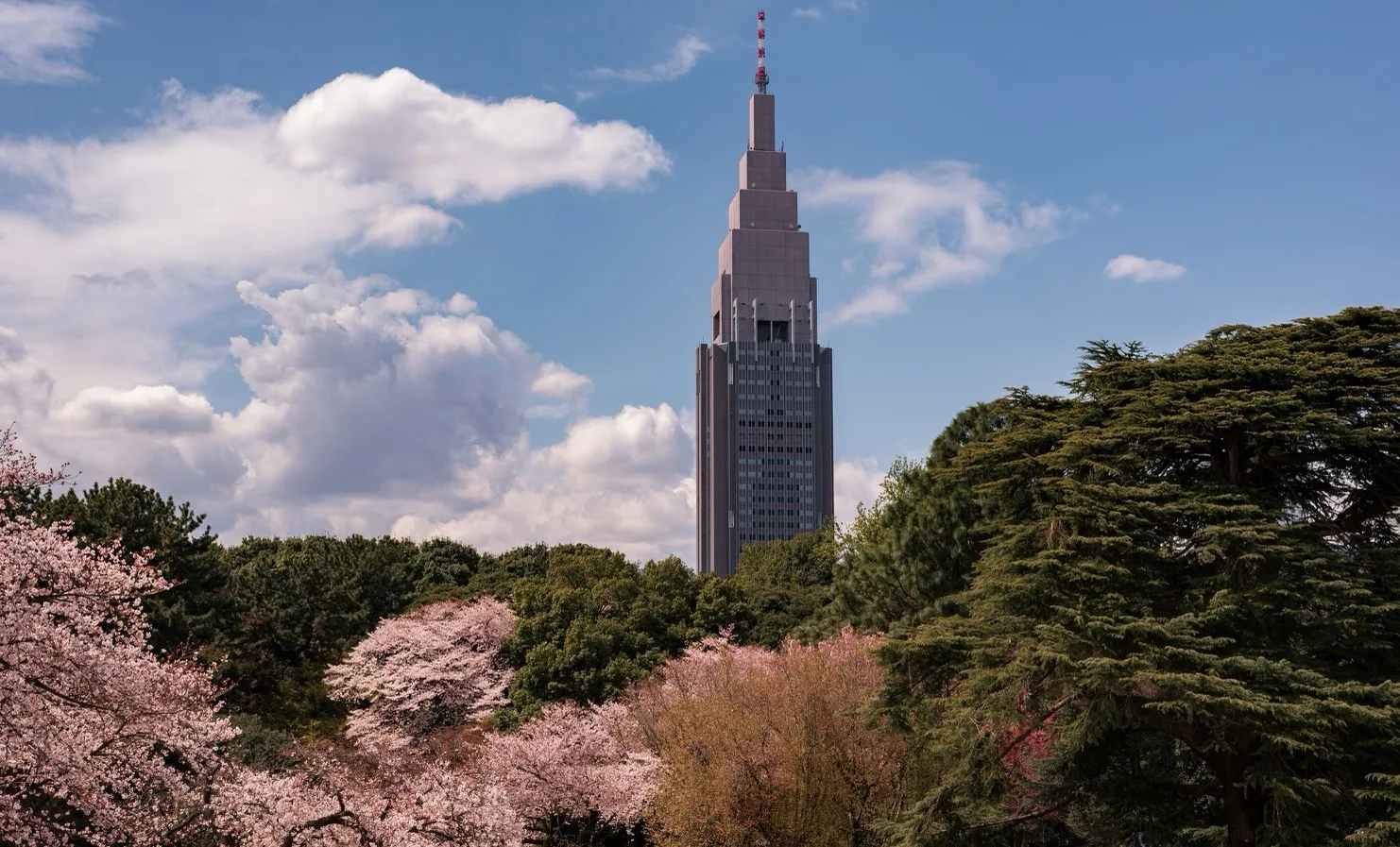
If you only have one day for Tokyo cherry blossom viewing, make it Shinjuku Gyoen. Because it has over 1,000 cherry trees and dozens of varieties (including early and late bloomers), you are almost guaranteed to see blossoms even if your timing is slightly off.
Why it’s special:
Wide lawns, elegant garden design, and space to breathe compared to many Tokyo cherry blossoms locations.
- How to beat the crowd: This park requires a reservation during peak season. Book the earliest 9:00 AM slot online. Most tourists head to the central lawns; instead, head immediately to the English Landscape Garden or the Japanese Traditional Garden.
Arrive right when the park opens (usually 9 AM). - The Best Angle:
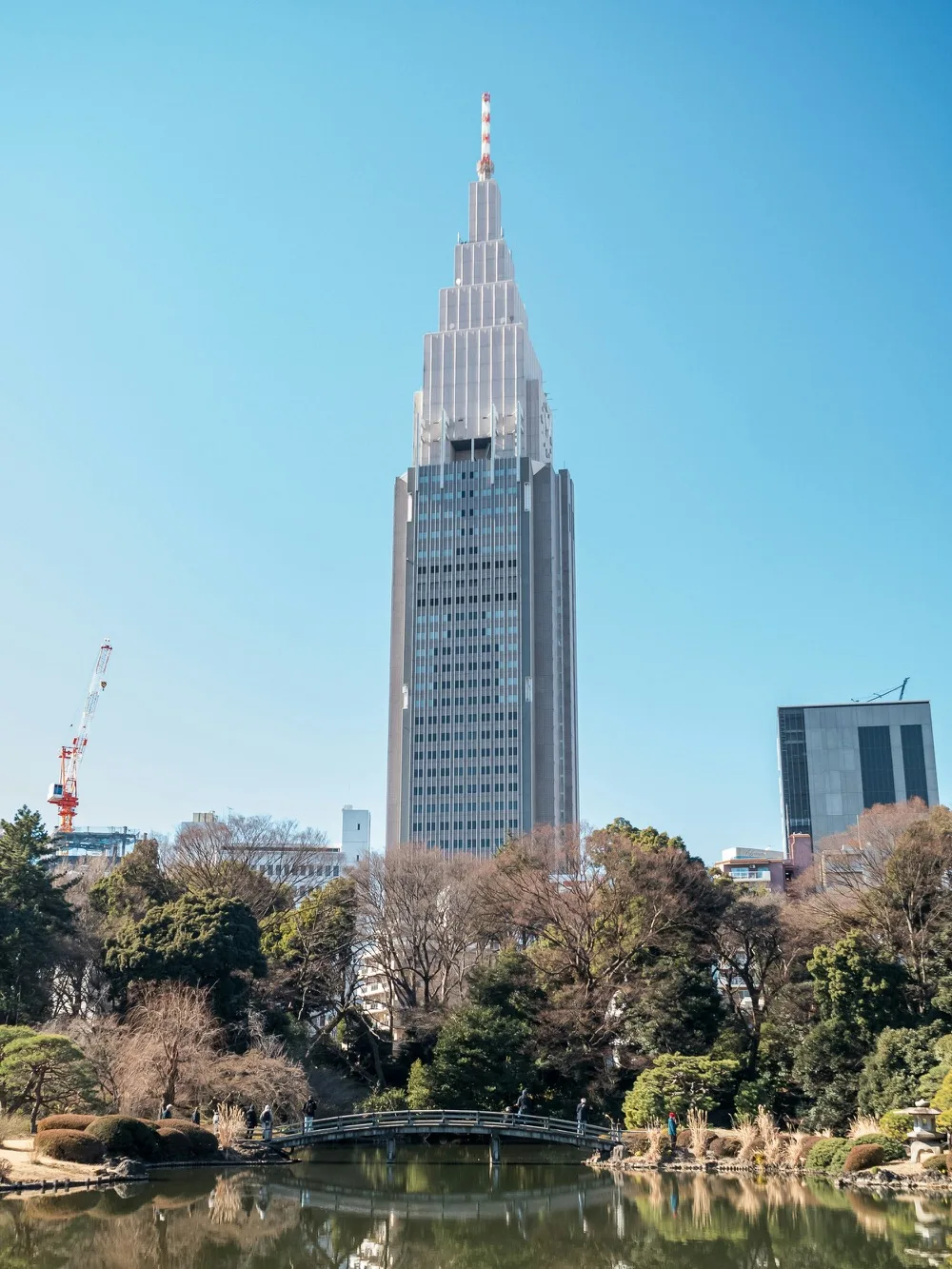
- Capture the NTT Docomo Yoyogi Building (which looks like the Empire State Building) framed by weeping cherry branches near the upper pond.
- Walk toward the English Garden lawn. Shoot low toward the grass with the Tokyo cherry blossoms filling the top of the frame and people picnicking beneath.
- Pro Tip: This is a “no alcohol” park. Security checks bags, which keeps the rowdy party crowds away and preserves the peaceful vibe.
- Crowd tip: Enter through the Okido Gate instead of the main Shinjuku entrance. Far fewer tourists.
2. Chidorigafuchi Moat:
Most Iconic Tokyo Cherry Blossoms View
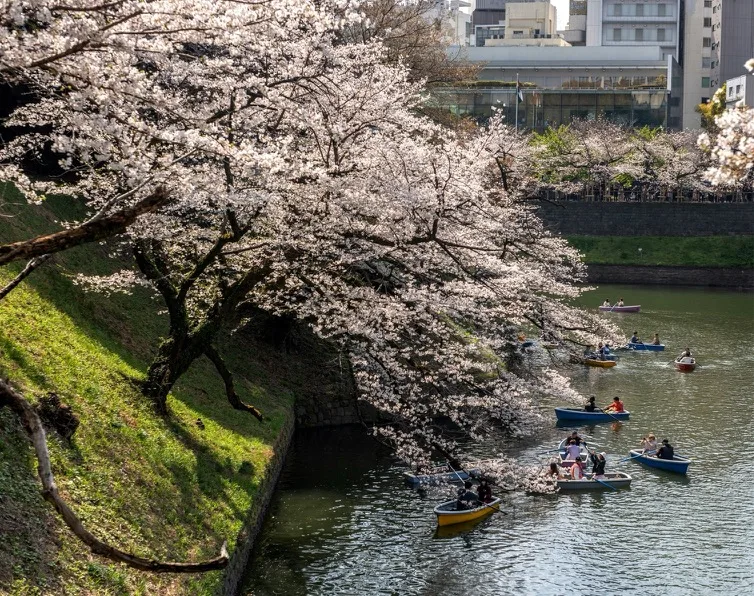
Chidorigafuchi near the Imperial Palace offers one of the most iconic Tokyo cherry blossoms scenes. The trees hang dramatically over the moat, and you can even rent rowboats beneath the sakura. This is the “postcard” shot of Japan. Hundreds of trees line the Imperial Palace moat, creating a literal tunnel of pink.
- How to beat the crowd: Don’t even try the boat rentals at noon unless you enjoy a 3-hour wait. Arrive at 8:00 AM to get in line for the 9:00 AM boat opening. Alternatively, go after 8:30 PM. The illuminations are stunning, and the crowds thin out significantly just before the lights turn off. Hence best time to go is early morning or during weekday evenings.
- The Best Angle:
- From the Kudanshita side, use a zoom lens to compress the boats in the water with the dense canopy above.
- Shoot from the Chidorigafuchi Green Way path looking down at boats floating under the Tokyo cherry blossoms.
- Insider Secret: Walk across the street to Kitanomaru Park. It shares the same trees but has 70% fewer people because everyone is obsessed with the moat view.
- Crowd tip: Enter from Kudanshita Station instead of Hanzomon to avoid the longest queues.
3. Meguro River (Nakameguro):
Most Photogenic Tokyo Cherry Blossoms
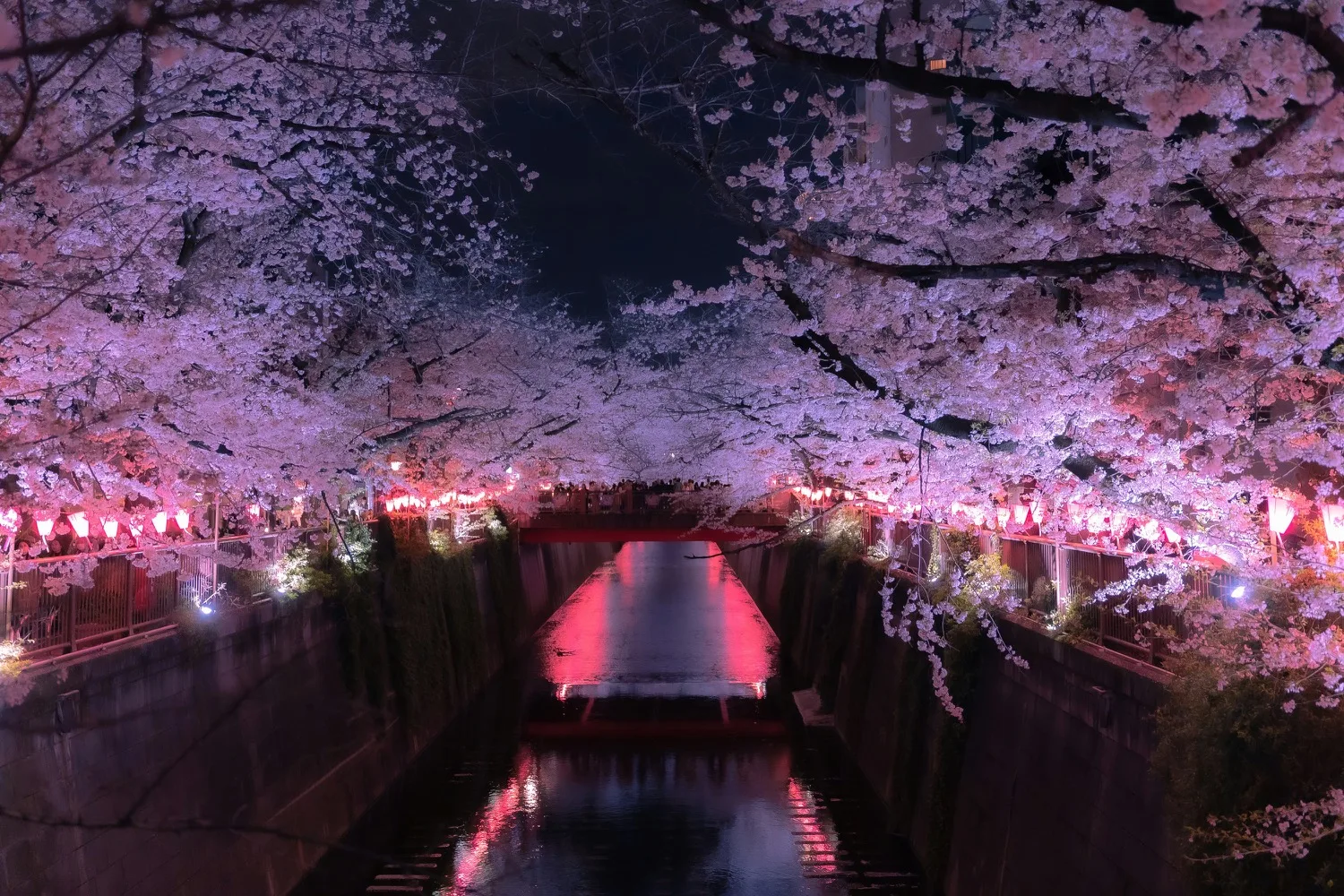
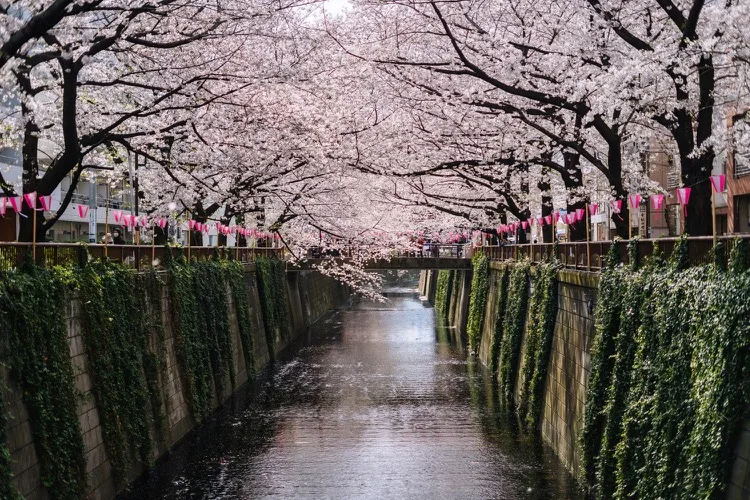
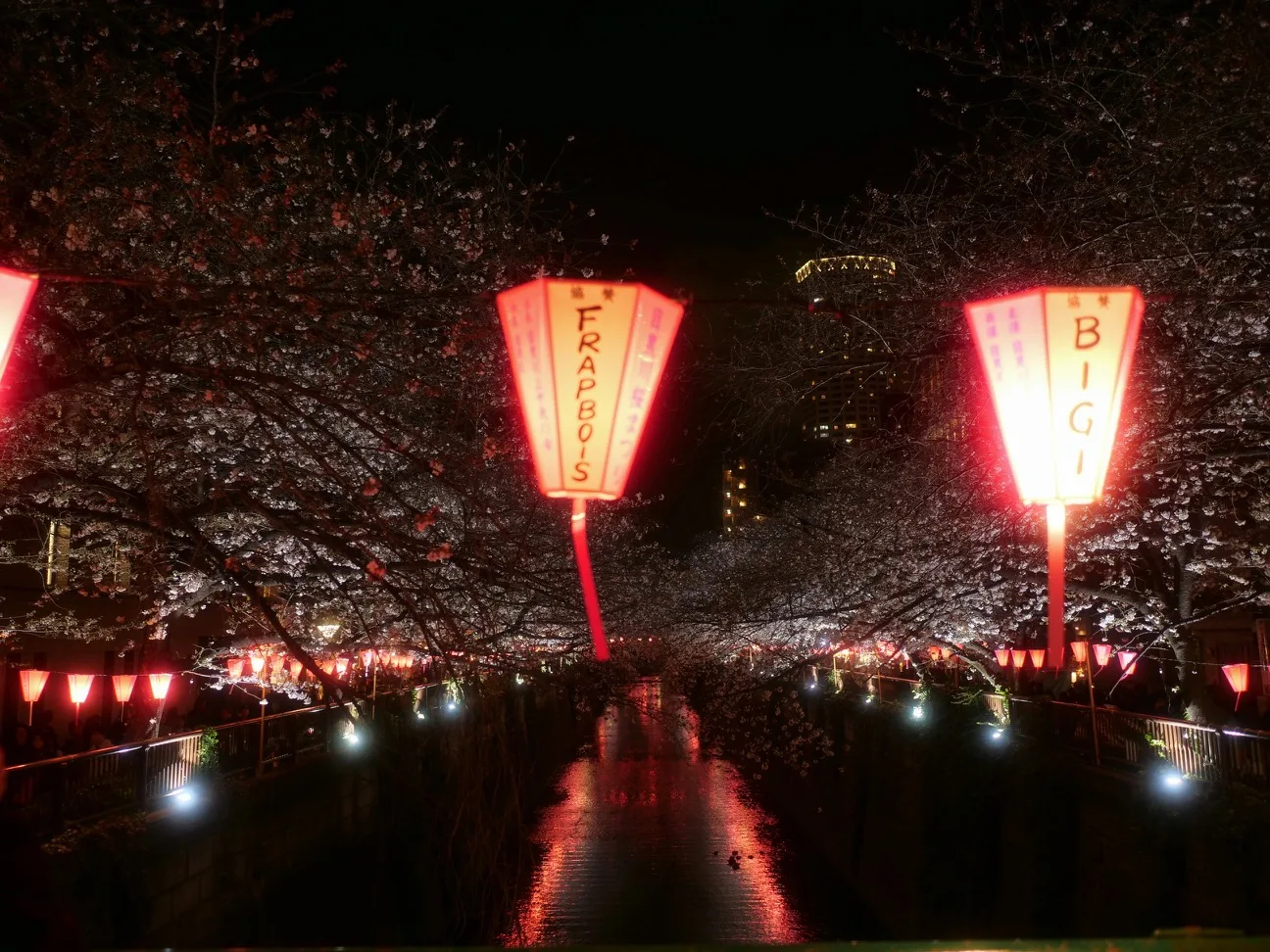
The Tokyo cherry blossom experience at Meguro River is all about the pink lanterns and the “Sakura Sparkling Wine” sold at street stalls. If you’ve seen photos of Tokyo cherry blossoms hanging over a river with lanterns glowing at night, chances are it was Meguro River.
Nearly 800 cherry trees line the canal, creating a tunnel of pink during peak bloom.
- How to beat the crowd: Avoid Nakameguro Station entirely—it’s a bottleneck. Instead, get off at Ikejiri-Ohashi Station and walk downstream toward Nakameguro. The upper part of the river is just as beautiful but far quieter. Best time to go is sunset into early evening.
- The Best Angle:
- Stand on one of the many bridges, but don’t just look straight. Aim your camera down at the water during the “Sakura Fubuki” (blossom blizzard) phase to see the river turned into a solid pink carpet of petals.
- Stand on one of the small bridges and shoot down the canal so the Tokyo cherry blossoms form a tunnel perspective.
- Crowd tip: Start from the Gotanda side and walk toward Nakameguro. Most visitors start from Nakameguro Station, so walking the opposite direction is calmer.
4. Sumida Park: Sakura with Tokyo Skytree
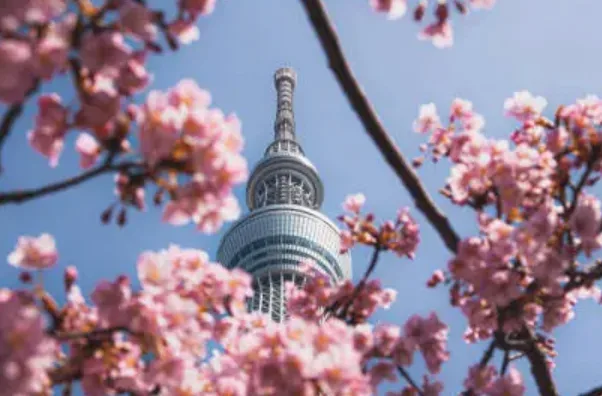
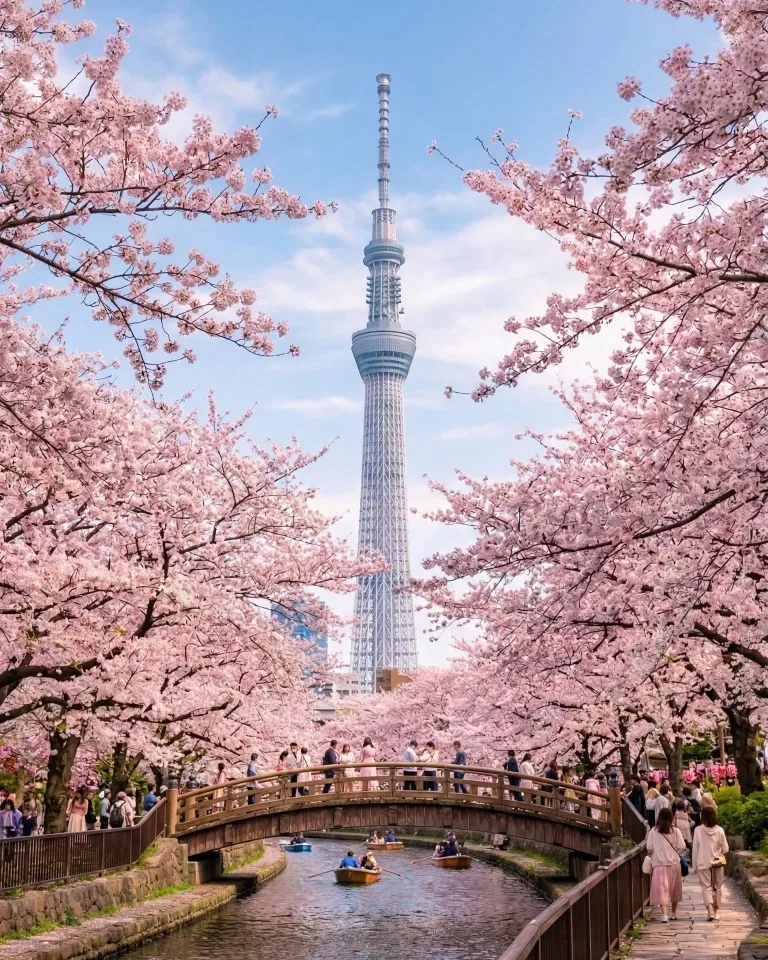
Located in Asakusa, this spot offers a perfect contrast between traditional nature and the futuristic Tokyo Skytree. If you want Tokyo cherry blossoms with a modern skyline, Sumida Park delivers one of the best compositions in the city.
Rows of cherry trees frame views of Tokyo Skytree across the river.
- How to beat the crowd: Most people stay on the Asakusa side. Cross the Sumida River to the Sumida-ku side. The park continues there, and the walking paths are much wider and more breathable. Best time to go is Sunrise or golden hour.
- The Best Angle: Use the cherry branches in the foreground to frame the Skytree. If you go at sunset, the tower lights up just as the sky turns blue, creating a “Blue Hour” masterpiece.
- Crowd tip: Walk toward the quieter northern section of Sumida Park where tour groups rarely go.
5. Ueno Park – Classic Hanami Atmosphere
Ueno Park is one of the oldest and most traditional Tokyo cherry blossoms viewing spots. Over 1,000 trees line the central pathway.
What makes it unique:
The energy. Locals gather for hanami picnics with food, drinks, and friends.
- Best time to go: Before 8 AM if you want peaceful photos. After 6 PM if you want the festive atmosphere.
- Best photo angle: Stand near the center walkway and shoot upward to capture the dense canopy of Tokyo cherry blossoms forming a pink ceiling.
- Crowd tip: Walk deeper into Shinobazu Pond area. Many tourists never make it there.
6. Yoyogi Park – Relaxed Local Sakura Spot
Yoyogi Park is less formal than other Tokyo cherry blossoms locations, but it has a relaxed and social atmosphere.
Expect music, picnics, and groups celebrating under the sakura trees.
- Best time to go: Late afternoon into sunset.
- Best photo angle: Capture groups sitting under the Tokyo cherry blossoms for authentic hanami storytelling photos.
- Crowd tip: The area closer to Meiji Shrine tends to be quieter.
7. Koishikawa Korakuen – Hidden Gem Tokyo Cherry Blossoms
This traditional Japanese garden feels worlds away from the busy city.
It’s one of the most peaceful places to enjoy Tokyo cherry blossoms with landscaped ponds, bridges, and historic scenery.
- Best time to go: Early morning.
- Best photo angle: Frame the red bridge with Tokyo cherry blossoms hanging above the water.
- Crowd tip: Visit on weekdays. Tour buses rarely stop here.
Comparison of Top Tokyo Cherry Blossom Spots
| Spot | Best Vibe | Best Time | Entry Fee |
| Shinjuku Gyoen | Peaceful/Picnic | 9:00 AM (Opening) | ¥500 |
| Chidorigafuchi | Romantic/Boats | 8:00 AM or 8:30 PM | Free |
| Meguro River | Festive/Night | Weekday Evenings | Free |
| Ueno Park | Party/Traditional | Sunrise (6:00 AM) | Free |
3 Rules for Beating the Crowds in 2026
- The “6 AM” Rule: In Tokyo, the sun rises early. If you are at Ueno Park or Yoyogi Park by 6:30 AM, you will share the trees with a few joggers and photographers instead of thousands of tourists.
- Go Late, Not Mid-Day: Most tour buses operate between 10:00 AM and 5:00 PM. Visiting the illuminated spots like Rikugien Garden or the Meguro River after 8:00 PM is much more manageable.
- Check the “Hana-no-michi”: Use local apps like Tenki.jp or Weathernews for real-time “Full Bloom” updates. If one park is past its prime, a park just 20 minutes away might be at its peak.
The Tokyo cherry blossom season is fleeting, but with a bit of planning, you can experience it like a local. Just remember to pack a high-quality picnic mat and some patience!
Photography Tips for Tokyo Cherry Blossoms
If you want better photos of Tokyo cherry blossoms, composition matters more than camera gear.
- Use layering: Frame Tokyo cherry blossoms in the foreground with temples, rivers, or city buildings behind.
- Shoot upward: Standing beneath the trees and shooting up captures the density of the blossoms.
- Use fallen petals: After peak bloom, fallen petals create pink carpets that add depth to your photos.
- Look for reflections: Water surfaces like rivers, ponds, or even puddles double the visual impact of Tokyo cherry blossoms.
- Use foreground framing: Frame sakura branches around temples, rivers, or city views.
How to Beat the Crowds at Tokyo Cherry Blossoms Spots
Tokyo cherry blossoms attract millions of visitors every year, but there are simple tricks to avoid the chaos.
- Go at sunrise
Early morning is the single best way to enjoy Tokyo cherry blossoms peacefully. - Visit weekdays
Monday through Thursday mornings are dramatically quieter. - Explore secondary entrances
Most tourists enter parks through the closest train station gate. - Walk further inside
Many people stop at the first sakura trees they see. Walking 10 minutes deeper often leads to empty areas.
Final Thoughts: Experiencing Tokyo Cherry Blossoms
Seeing Tokyo cherry blossoms in full bloom is one of the most magical seasonal experiences in the world. The key is not just choosing the right locations, but visiting them at the right time and slowing down enough to appreciate the moment.
Whether you’re walking beneath lantern-lit sakura at Meguro River, photographing reflections near the Imperial Palace, or enjoying a quiet morning in Shinjuku Gyoen, the beauty of Tokyo cherry blossoms is something that stays with you long after the petals fall.
If you plan carefully and arrive early, you’ll experience Tokyo cherry blossoms the way locals do—peaceful, beautiful, and unforgettable.
You can download the Japan itinerary here. Costs less than a coffee and will save you months of research and planning. Or you can book my time for planning, booking your entire holiday.
Where to Stay
Luxury
- Bvlgari Hotel Tokyo
- Fairmont Tokyo – with view of Tokyo Tower
- The prince Park – with view of Tokyo Tower
Mid range
Budget
Want to know more things to do?
Check out my curated list of activities to do.
FAQ
- When is the best time to see Tokyo cherry blossoms?
The best time to see Tokyo cherry blossoms is usually between late March and early April. Peak bloom, known as mankai, typically lasts about one week depending on weather conditions. - Where are the best cherry blossom spots in Tokyo?
Some of the best Tokyo cherry blossoms locations include Shinjuku Gyoen, Meguro River, Ueno Park, Chidorigafuchi near the Imperial Palace, Sumida Park, Yoyogi Park, and Koishikawa Korakuen Garden. - What time of day is best for seeing sakura in Tokyo?
Early morning between 6 AM and 8:30 AM is the best time to enjoy Tokyo cherry blossoms with fewer crowds and better lighting for photos. - How long do cherry blossoms last in Tokyo?
Tokyo cherry blossoms usually stay in full bloom for around 5 to 7 days before petals begin to fall. - What is hanami in Japan?
Hanami is the Japanese tradition of enjoying cherry blossoms by gathering with friends and family under sakura trees for picnics during the spring season. - Can you see cherry blossoms in Tokyo at night?
Yes. Many Tokyo cherry blossoms locations offer nighttime illumination known as yozakura, especially at Meguro River, Ueno Park, and Chidorigafuchi.
Pin it

Leave a Reply